Unlocking the Micro-Script
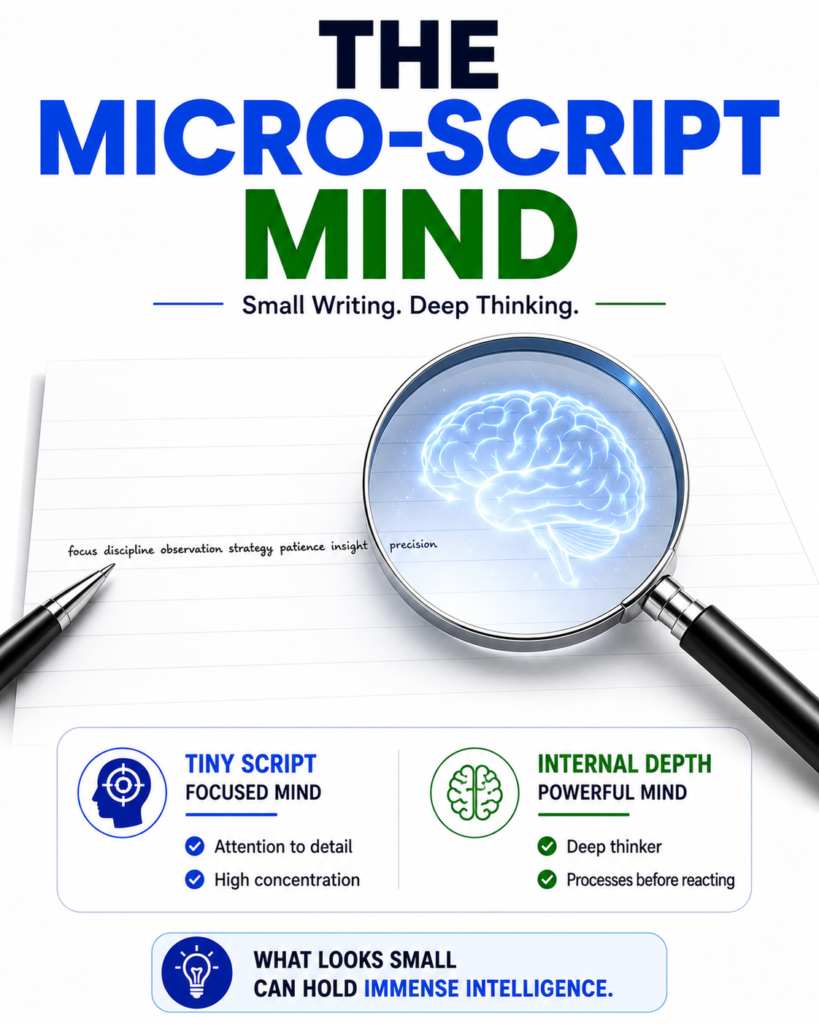
Have you ever received a handwritten note that looked less like English and more like a line of microscopic ants marching across the page? You likely had to squint, bring the paper closer to your face, and marvel at the sheer mechanical precision required to write words that tiny.
In graphology, handwriting size is the absolute, undeniable metric of the ego. It tells us exactly how much space the writer feels they deserve to take up in the physical and social world.
While massive, sweeping handwriting screams for attention and validation, exceptionally small handwriting whispers a completely different psychological story.
Writers of the “micro-script” are not trying to shrink away from life; they are trying to distill it. They are the specialists, the deep thinkers, and the meticulous observers of the world.
In this comprehensive guide, we are going deep into the mechanics of the micro-script. We will explore the defining small handwriting traits that shape these individuals, revealing the massive intellectual power hidden inside those tiny letters.
The Physics of the Micro-Script:
What Actually Constitutes “Small”?
Before we can analyze the psychology, we must establish a clinical baseline. “Small” is not a subjective feeling; it is a measurable, physical dimension on the page.
In professional handwriting analysis, we do not look at the capital letters or the upper loops (like ‘l’ or ‘t’) to determine size. We look exclusively at the middle zone—the vowels and short consonants (a, c, e, m, n, o) that sit directly on the baseline.
Measuring Your Script:
The 3-Millimeter Rule To diagnose exceptionally small handwriting, find a ruler.
- Large Handwriting: The middle-zone letters are 3 millimeters (or taller) in height.
- Average Handwriting: The middle-zone letters sit between 1.5 and 3 millimeters.
- Small Handwriting: The middle-zone letters are less than 1.5 millimeters tall.
If the letters are so small that they look like a single thread of ink without magnification (often dipping below 1 millimeter), you are dealing with exceptionally small handwriting. This requires an immense, almost painful level of fine motor control, meaning the psychological traits we are about to discuss will be amplified to their extreme limits.
The Core Psychology:
Why the Brain Shrinks the Letters?
To understand the traits of small handwriting, you have to understand the neurological process behind it.
Writing large is a natural, sweeping motion that utilizes the entire arm and wrist. It is physically freeing. Writing exceptionally small, however, requires the brain to lock the arm and wrist down, transferring all motor control to the tiny muscles in the very tips of the fingers.
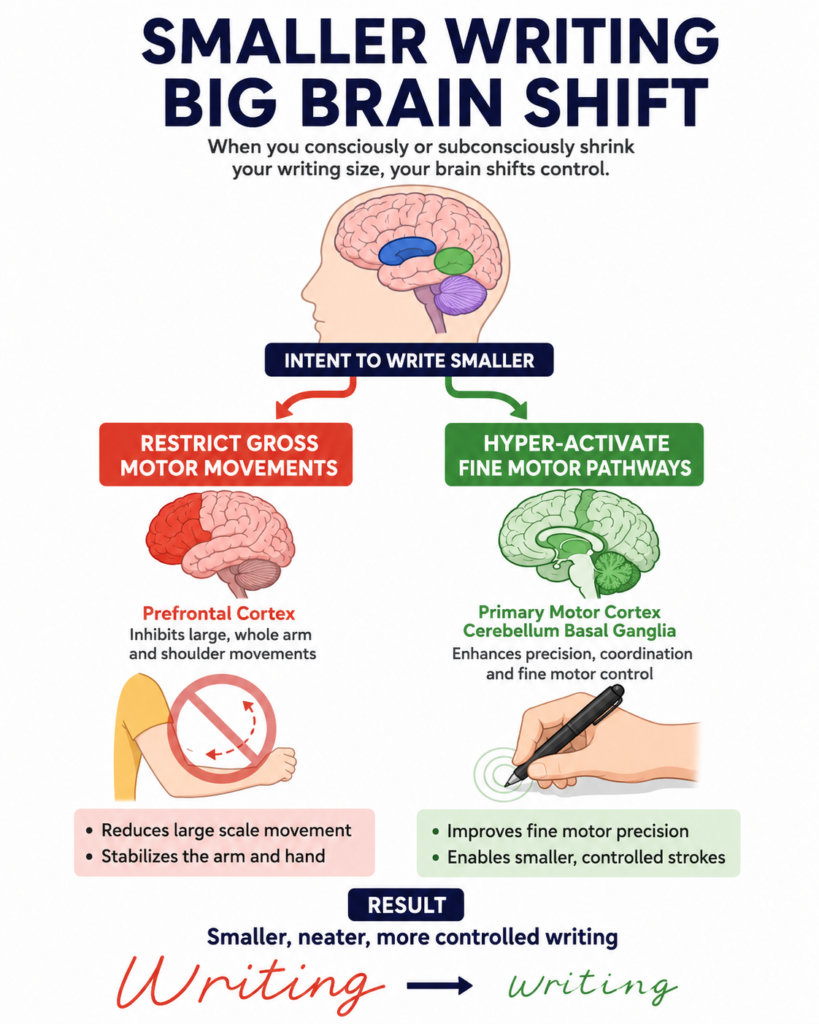
This physical restriction is a direct mirror of the writer’s internal state. The brain is literally pulling its energy inward. It is shutting out external distractions, minimizing physical movement, and forcing a state of hyper-concentration. The physical compression on the page is a direct reflection of psychological compression in the mind.
The 5 Common Small Handwriting Traits Revealed
When a person consistently writes with a micro-script, they project a highly specific, easily identifiable personality profile. Here are the five foundational traits of the small handwriting writer.
Trait 1:
Laser-Targeted Concentration and Focus
This is the absolute hallmark of small handwriting. You simply cannot write letters 1 millimeter high if your mind is wandering or if you are easily distracted by your environment.

- The Reality: Writers with exceptionally small handwriting possess an almost superhuman ability to concentrate. They can put on noise-canceling headphones, lock onto a complex problem, and block out the entire world for hours at a time.
- The Professional Edge: These individuals make elite programmers, research scientists, surgeons, and financial analysts. They do not get overwhelmed by massive datasets; they thrive in them.
- The Downside: They can become so hyper-focused on the micro-details of a project that they completely lose sight of the “big picture” or the overarching strategy.
Trait 2:
The Introverted Observer (Protecting the Ego)
Remember, handwriting size dictates how much space your ego demands. Exceptionally small letters indicate an ego that has been deliberately pulled back and shielded from the outside world.
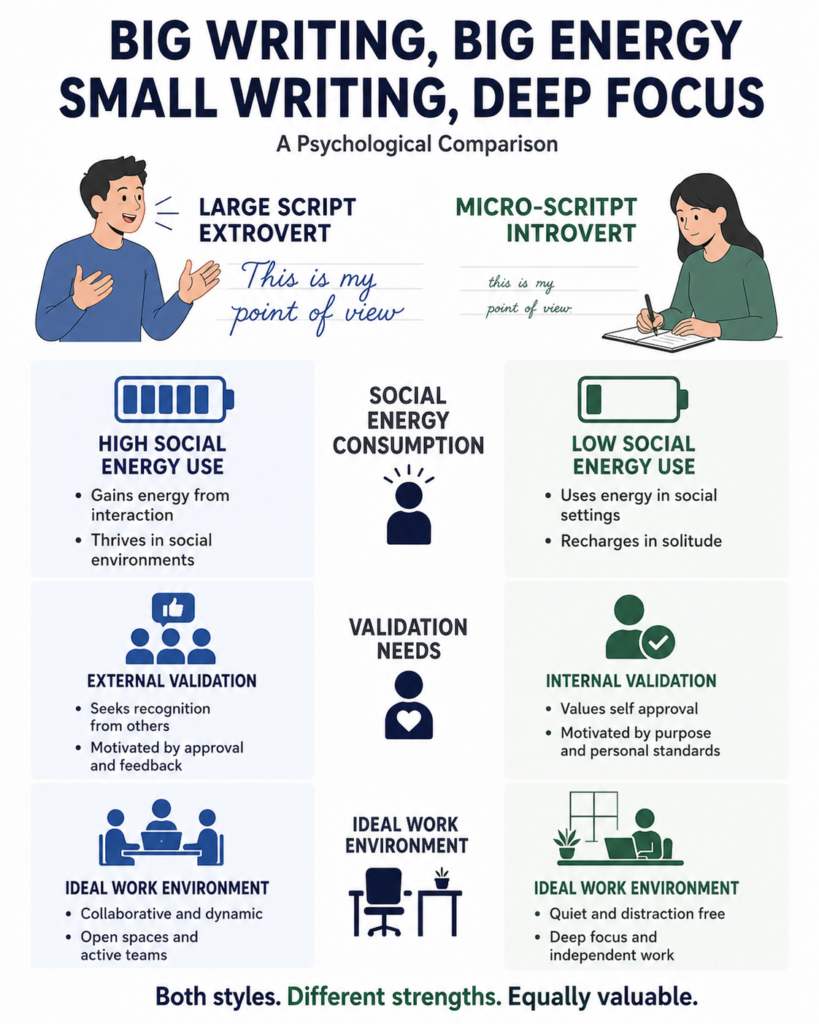
- The Reality: These writers are almost universally introverted. They do not want to be the center of attention, and they actively avoid the spotlight. They prefer to sit at the edge of the room and observe the dynamics of the crowd rather than participate in them.
- Social Dynamics: They are not necessarily shy or antisocial; they are simply self-contained. They do not need external validation or loud praise to feel secure in their abilities. They draw their energy from within, finding loud, boisterous environments to be physically and mentally exhausting.
Trait 3:
Meticulous Attention to Detail (The Analyst’s Stroke)
The physical precision required to form microscopic letters translates directly into mental precision in daily life.
- The Reality: A person who writes this small notices everything. They are the people who catch the typo on page 42 of a contract, spot the slight inconsistency in a story, and remember the exact phrasing of a conversation from three weeks ago.
- The Perfectionist Trap: Because they are so detail-oriented, they are highly prone to perfectionism. They struggle to delegate tasks because they fundamentally believe no one else will execute the details as flawlessly as they will.
Trait 4:
Emotional Containment and Modesty
Just as they restrict their physical movements to write the tiny letters, they restrict their emotional expressions.
- The Reality: These writers keep their emotional cards held very close to their chest. They are extremely modest, rarely boasting about their achievements or flashing their wealth. Even when they are experiencing intense joy or profound sadness, their external demeanor remains calm, collected, and highly regulated.
- Relationship Challenges: To a highly expressive, extroverted partner, the small writer can seem emotionally cold or unreadable. They do not typically engage in grand, sweeping romantic gestures; they show love through quiet, consistent, and practical devotion.
Trait 5:
Intellectual Independence and Academic Drive
Because the tiny middle zone compresses the social aspect of the personality, the energy often shoots upward into the upper zone (the intellect).
- The Reality: Exceptionally small handwriting is frequently found among academics, authors, and deep-thinkers. They are highly independent in their thought processes. They do not care about popular opinion or societal trends; they care about logic, facts, and intellectual discovery.
- The Mental Sandbox: Their internal world is incredibly rich and complex. They are completely comfortable spending days completely alone, provided they have a difficult problem to solve or a fascinating topic to research.
Contextual Variables:
When Small Handwriting Becomes a Warning Sign
In professional graphology, a single trait never tells the whole story. You must look at how the small size interacts with other elements of the script. When exceptionally small handwriting is paired with specific stressors, it can reveal a mind under immense pressure.
Small Handwriting + Heavy Pressure
(The Pressure Cooker)
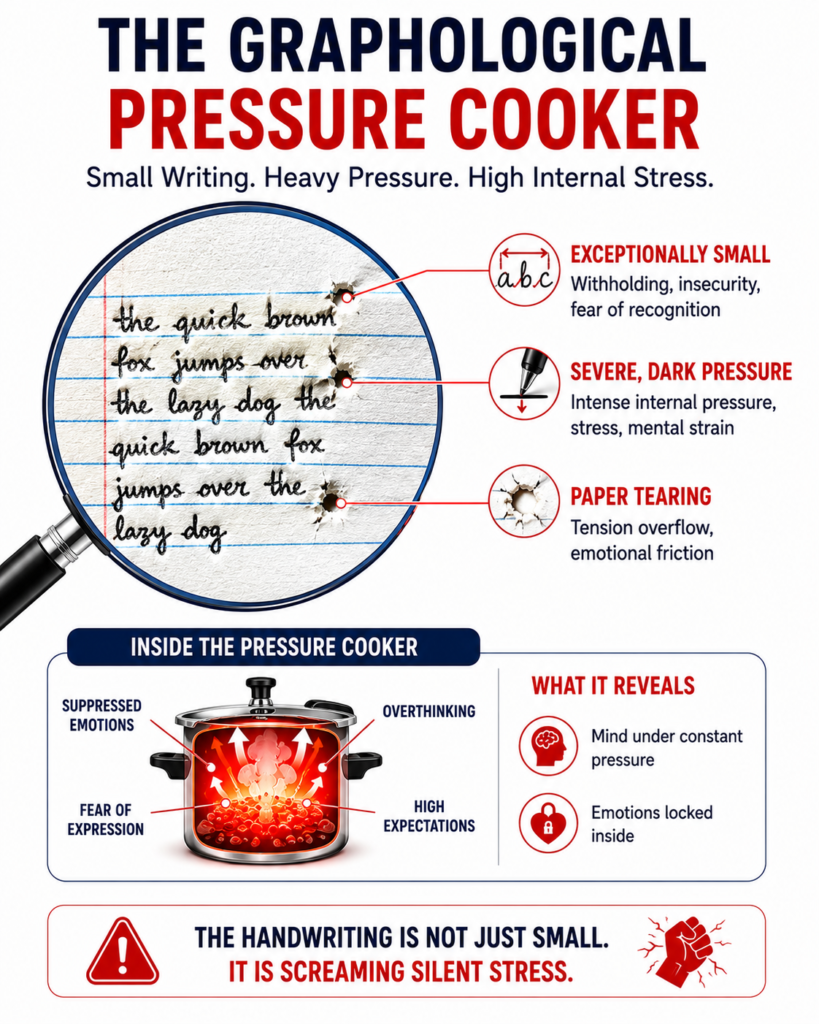
If you rub your fingers over the back of the paper and feel deep ridges left by the pen, you are dealing with heavy pressure.
- The Meaning: Small size dictates emotional containment, but heavy pressure dictates intense, raw emotional energy. This is a dangerous combination. The writer has massive feelings (anger, passion, or frustration) but is forcing themselves to hold it all inside. They are a psychological pressure cooker, highly susceptible to sudden, explosive emotional outbursts when their control finally slips.
Small Handwriting + Extremely Wide Spacing
(The Isolated Mind)
Look at the blank space between the words and the lines.
- The Meaning: If the writing is microscopic and the writer leaves massive, gaping canyons of white space between every word, you are looking at severe social isolation. The small size shows introversion, but the wide spacing shows active avoidance. This person is not just observing the world; they are deeply afraid of it and are actively pushing people away to maintain a protective barrier.
Small Handwriting + A Leftward Slant
(The Defensive Shield)
As we discussed in our guide on handwriting slant psychology, a leftward lean indicates a pulling away from the future and from other people.
- The Meaning: When combined with a micro-script, this person is fiercely independent, highly guarded, and deeply suspicious of others’ motives. They have built an impenetrable wall around their ego. Earning their trust is a monumental task that requires years of consistent, logical, and non-intrusive behavior.
Graphotherapy: Should You Enlarge Your Script?
If you are reading this and realizing your handwriting is microscopic, you might be wondering if you should change it. The answer depends entirely on whether your traits are serving you or hindering you.
If your small handwriting fuels your career as a software engineer and you are perfectly happy with your tight-knit circle of three close friends, do not change a thing. Your handwriting perfectly matches your ideal life architecture.
However, if you feel chronically overlooked at work, struggle to assert yourself in social situations, or feel trapped by your own perfectionism, graphotherapy can help.
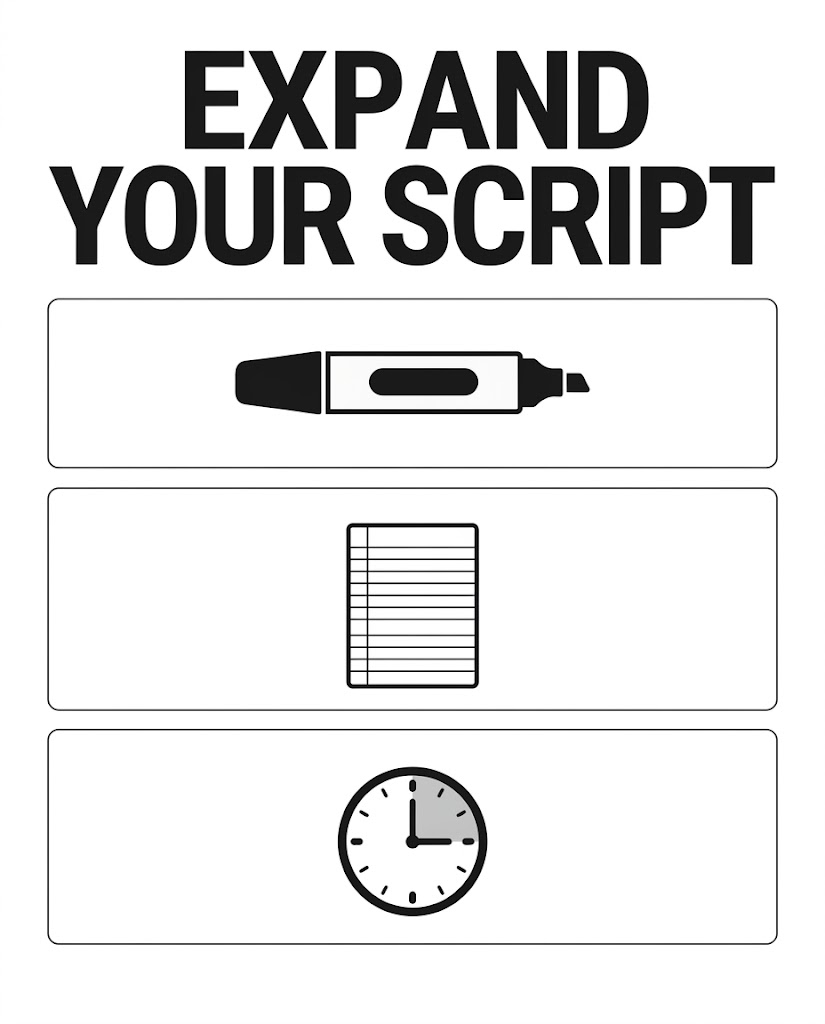
The Expansion Exercise:
- Buy a medium-point marker (like a Sharpie pen or a thick felt-tip). This forces you to write larger just to keep the letters legible.
- Use lined paper with wide ruling.
- For 15 minutes a day, practice writing your daily journal entries so that the middle-zone letters touch both the bottom and the top lines of the ruling.
- You are forcing your hand to take up more physical space, which over time, subconsciously signals to your brain that it is safe to take up more psychological space in your daily life.
Conclusion: The Power of Thinking Small
In a world that constantly tells us to “go big or go home,” exceptionally small handwriting is a quiet act of rebellion. It is a refusal to perform for the crowd.
By understanding these small handwriting traits, we realize that tiny penmanship is not a sign of weakness or insignificance. It is the physical manifestation of a highly concentrated, meticulously organized, and intellectually formidable mind.
The next time you receive a note written in a micro-script, do not just squint at the words. Appreciate the intense focus, the quiet modesty, and the brilliant analytical engine required to put them there.
Your Next Step: Are you curious how these introverted, detail-oriented traits translate to the workplace? Take a look at a colleague’s writing. If they write incredibly small, how do they structure their signature? Do they blow their name up to compensate, or do they keep their signature just as tiny and private?
3 Responses
Fascinating dive into the micro-script, especially the section on Contextual Variables. I have a highly specific diagnostic question regarding the “Defensive Shield” and the “Pressure Cooker” traits. What is the clinical interpretation if a subject presents with exceptionally small handwriting (under 1mm) and a severe leftward slant, but simultaneously exhibits extremely heavy pressure AND a rigidly straight, unyielding baseline? Does the rigid baseline imply that their emotional containment is successful, or does the heavy pressure override it, making an emotional outburst inevitable?
A brilliant and highly advanced clinical question. When you combine a sub-1mm micro-script with a severe leftward slant, heavy pressure, and a rigidly straight, unyielding baseline, you are observing a psychological fortress.
The rigid baseline does not mean the emotional containment is successful in a healthy way. Rather, it indicates an iron-fisted, conscious suppression of their internal state. The heavy pressure reveals the massive kinetic energy and emotional weight they are carrying, while the leftward lean shows their fundamental distrust of others. They are actively fighting their own emotional volatility.
In my practice, I have observed that individuals with this specific profile rarely have explosive public outbursts. Instead, the ‘pressure cooker’ implodes. The immense physical and mental toll of maintaining that rigid control often manifests as severe somatic symptoms—migraines, chronic fatigue, or deep physical exhaustion. This is exactly why, in our 30-Day Rewire programs, we introduce the Expansion Exercise very gradually for these individuals, so we don’t shatter that defensive shield too abruptly and overwhelm their nervous system.
As an options trader who constantly monitors the Bank Nifty, your breakdown of Trait 1 (Laser-Targeted Concentration) hit the nail on the head. My colleagues always joke about my microscopic writing on my trade logs. I measured it using your 3-Millimeter Rule, and my middle-zone letters are definitely under 1.5mm! I never realized that restricting my fine motor control was my brain’s way of blocking out the trading floor noise. Understanding these small handwriting traits has given me a lot of clarity on my own intense focus.