Executive Summary
Handwriting analysis for professionals is a clinical, biometric assessment of a leader’s subconscious neurological output. By evaluating the micro-movements of pen pressure, spatial arrangement, and baseline trajectory, certified experts map an executive’s stress tolerance, decision-making velocity, and emotional intelligence, providing an uneditable psychological blueprint for career mastery.
The Silent Saboteur in Your Career
You have spent years curating a bulletproof corporate mask. You have mastered the firm handshake, the modulated speaking voice, and the perfectly optimized LinkedIn profile. You sit in high-stakes strategy meetings, negotiate massive contracts, and project an aura of total control.
Yet, when you are completely honest with yourself behind closed doors, you know there is a leak in the system.
Perhaps it is a paralyzing bout of imposter syndrome that strikes just before a major promotion. Perhaps it is a tendency to micromanage your team into the ground, or a sudden, inexplicable hesitation when you need to execute a high-risk financial decision. You have read the leadership books and attended the seminars, but conscious motivation is failing you. Why? Because you are trying to out-think a central nervous system that is terrified.
Every time you uncap a pen to sign a document or jot down meeting notes, your brain bypasses your carefully constructed ego. The microscopic tension in your fingers broadcasts your deepest fears, your raw ambition, and your unhealed traumas directly onto the page.
You are reading this because you are exhausted by generic executive coaching that only treats the symptoms. You need the biometric truth. By leveraging handwriting analysis for professionals, we do not ask you to self-report your flaws. We read the friction in your ink, uncover the exact subconscious blocks sabotaging your trajectory, and hand you the tools to physically rewrite your root code.
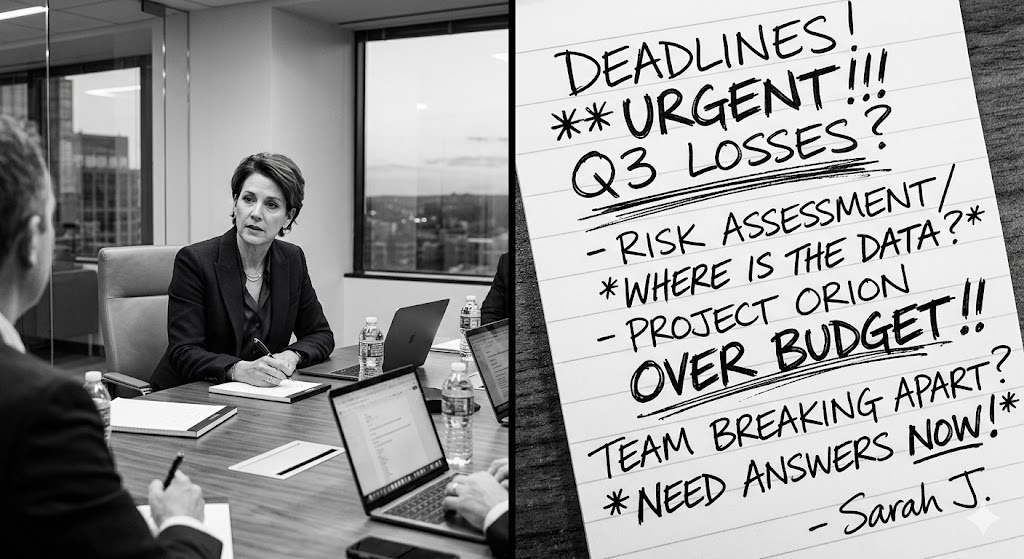
Why the Corporate World is Turning to Ink?
If you are a high-level manager, a startup founder, or an ambitious director researching this topic, your search intent is heavily driven by risk mitigation and performance optimization. You are not looking for a parlor trick. You are looking for an empirical edge in a hyper-competitive market. You want to know if tweaking the way you cross your “t”s can actually shift how the board perceives your leadership.
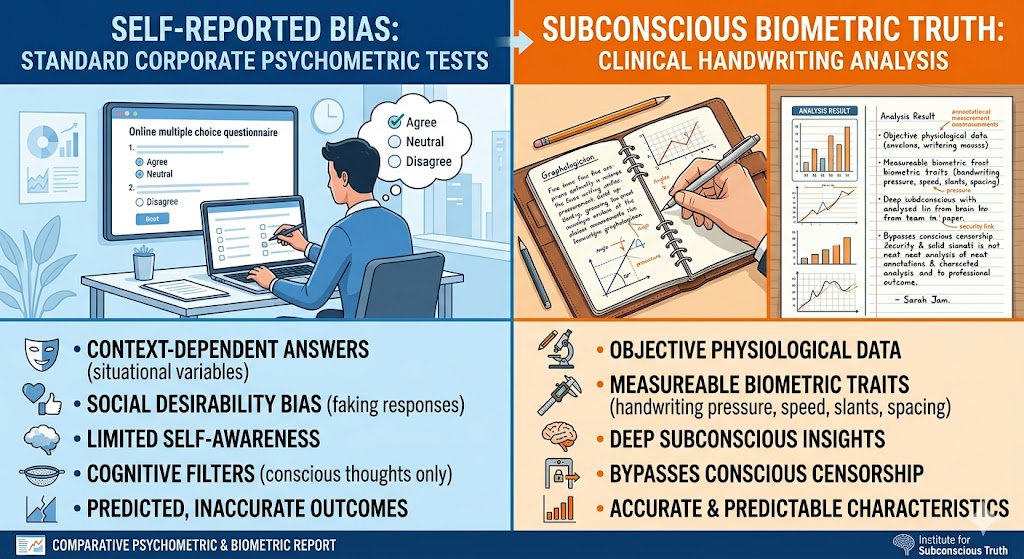
Contrastive Analysis: The Demise of the 360-Degree Review
To understand the explosive demand for clinical graphology in the C-suite, we must first dismantle the catastrophic advice currently peddled by standard HR consultants. Let us destroy these industry myths.
- Myth 1: “Self-reported personality tests are reliable.” The corporate world relies on multiple-choice assessments like MBTI or DiSC. These are fundamentally broken for high-achievers. Intelligent professionals know exactly which bubble to fill in to appear “collaborative and visionary.” These tests measure your self-delusion and your ability to game an algorithm, not your reality.
- Myth 2: “Executive coaching can fix any behavioral issue.” Traditional coaching relies on talk therapy. Executives are brilliant communicators; they are highly skilled at rationalizing their bad habits and controlling the narrative. They will spend months discussing their “strategic vision” while completely obscuring the deep-seated fear of failure that actually drives their toxic micromanagement.
- The Graphological Advantage: Handwriting cannot be gamed. A professional cannot “fake good” on a spontaneous handwriting sample because they do not know what the clinical graphologist is measuring. They do not realize that the microscopic, needle-like points in their lowercase “m” just revealed a ruthless, cynical lack of empathy that no 360-degree review would ever dare put in writing.
High Information Gain: The Anatomy of Executive Ink
In my experience analyzing the handwriting of top-tier professionals at www.thegraphology.com, I have seen Ivy League resumes instantly invalidated by a single, catastrophic stroke of ink.
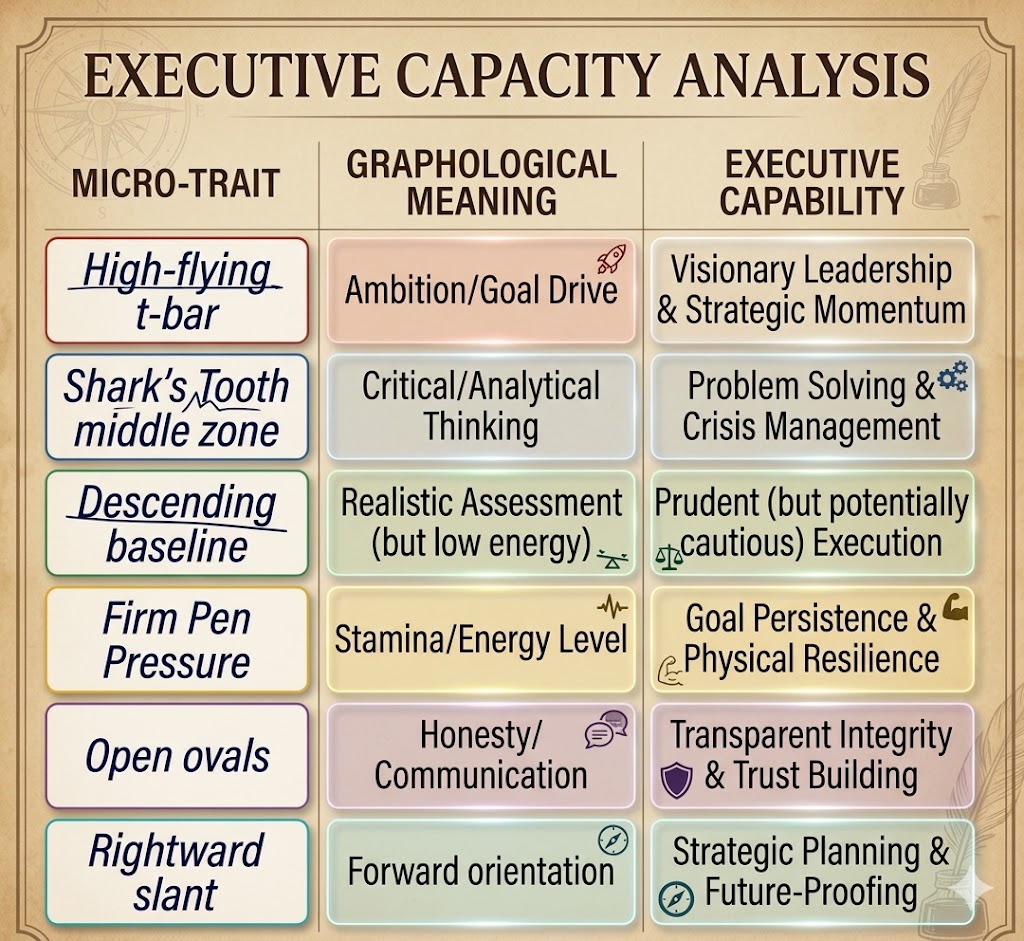
We do not look at professional handwriting to see if it is “neat.” Aesthetics are entirely irrelevant. We look for specific, recurring pathological markers that dictate how a leader will perform when the market crashes or the company’s survival is on the line.
Here are the core pillars of an executive biometric audit.
1. The T-Bar: The Altitude of Your Ambition
The horizontal cross on the lowercase “t” is the ultimate graphological thermometer for a professional’s ambition, goal-setting capacity, and executive presence.
- The High T-Bar: A t-bar crossed firmly at the very top of the stem indicates a leader with massive ambition, high self-esteem, and the courage to take calculated risks. They naturally assume authority and project a reality-distortion field that makes others want to follow them.
- The Low T-Bar: A professional who crosses their “t” low on the stem suffers from chronic imposter syndrome. Regardless of their impressive title or salary, they internally feel inadequate. They consistently set low targets, avoid necessary confrontations with underperforming staff, and subconsciously fear their own success.
- The Sweeping T-Bar: If the crossbar sweeps aggressively to the right, extending far past the stem, the executive is highly impatient, driven by rapid forward momentum, and demands immediate execution from their team.
2. Pen Pressure: The Vitality and Volatility Metric
Pressure measures the depth of the executive’s emotional intensity, physical drive, and stress response.
- Heavy Pressure: Professionals who press deeply into the paper possess immense vitality, focus, and drive. They are the heavy lifters. However, if this heavy pressure is combined with sharp, angular letter connections, you are looking at a dictator. They will drive short-term profits while completely destroying departmental morale.
- Light Pressure: A leader with light, airy pressure is highly adaptable, diplomatic, and intellectually driven. They avoid emotional friction and excel in negotiations requiring extreme tact. However, if the pressure is too light, they may lack the aggressive fortitude required to execute painful corporate restructuring.
3. The Baseline: Riding the Emotional Market
The baseline—the imaginary line your words rest upon on unlined paper—is the ultimate indicator of your emotional resilience.
- The Ascending Baseline: A leader whose writing naturally climbs upward at a 5-to-10 degree angle possesses relentless, grounded optimism. Even in a crisis, their central nervous system genuinely believes in a positive outcome, allowing them to pivot quickly.
- The Descending Baseline: This is a critical red flag. If an executive’s writing droops downward, they are experiencing profound, silent burnout. They may smile in the boardroom, but their neurological battery is completely empty. They are operating on fumes and will eventually drop the ball on major initiatives.
4. Spatial Margins: The Delegation Matrix
How a professional utilizes the blank space on a page reveals their relationship with time, risk, and boundaries.
- The Left Margin (The Past): A wide left margin indicates a leader who is eager to move away from tradition and the past. They are forward-thinking disruptors. A narrow left margin shows a leader who is deeply cautious, bound by legacy systems, and resistant to structural change.
- Word Spacing (Boundaries): Words that are crammed tightly together reveal a micromanager who cannot give their team breathing room. Wide, clear spaces between words indicate a leader with excellent emotional boundaries who trusts their directors to execute without constant oversight.
First-Hand Experience: Case Studies from the Corporate Trenches
Theory is meaningless without tactical application. To truly grasp the ROI of this science, consider these synthesized case studies from our proprietary archives.
Case Study 1: The Fund Manager Who Couldn’t Pull the Trigger
We were retained by the managing director of an equities trading firm. One of their top portfolio managers, who had previously generated massive returns navigating the Nifty and Bank Nifty indices, had suddenly frozen. Despite his sophisticated technical analysis, he was hesitating on critical trades, missing massive market opportunities, and losing the firm millions in potential upside.
His standard performance reviews showed no issues. His market knowledge was unparalleled. But his spontaneous handwriting sample revealed a terrifying shift.
While his historical writing samples (from his hiring date) featured a firm, slightly ascending baseline and sharp, decisive strokes, his current sample was entirely different. His baseline was violently erratic—jumping up and down like a volatile stock chart. Worse, the terminal strokes of his words hooked backward, a classic graphological sign of severe self-doubt and fear of the future.
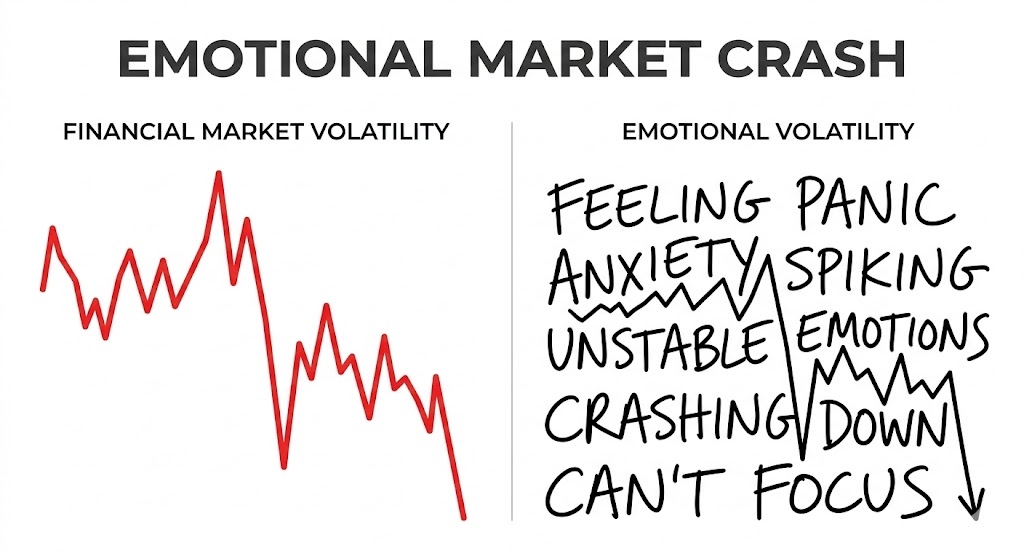
The Verdict: The intense, daily pressure of the Indian stock market had finally fractured his central nervous system. He wasn’t lacking data; he was suffering from acute decision fatigue and an overwhelming subconscious fear of making a catastrophic mistake. By identifying this invisible friction, we prescribed a strict 30-day graphotherapy protocol aimed at stabilizing his baseline. By forcing his hand to execute firm, straight baselines, we stabilized his autonomic nervous system. Within six weeks, his trade execution velocity returned to peak levels.
Case Study 2: The Toxic Founder Erasing Their Own Success
A private equity firm was poised to acquire a rapidly scaling SaaS company. The firm loved the founder’s pitch deck. However, as part of their advanced due diligence, they requested a biometric audit of the founder.
The findings were alarming. While his signature was massive (projecting intense public confidence), his regular script was microscopic. Furthermore, his lowercase “o”s and “a”s contained tight, double-looped knots. Most dangerously, his signature featured a heavy “strikethrough”—a line drawn aggressively straight through the center of his own name.
The Verdict: We informed the PE firm that this founder was a deeply paranoid, highly secretive micromanager. The double loops indicated a chronic tendency to withhold critical financial or operational truths. The strikethrough was the ultimate red flag: it is the graphological equivalent of self-cancellation. The founder subconsciously loathed himself and would inevitably sabotage the company just as the acquisition crossed the finish line.
The firm dug deeper into the company’s internal communications and discovered a massive, hidden retention crisis among the senior engineering team. The ink saw the toxicity months before the balance sheet did.
Step-by-Step Framework: Conducting a Subconscious Audit
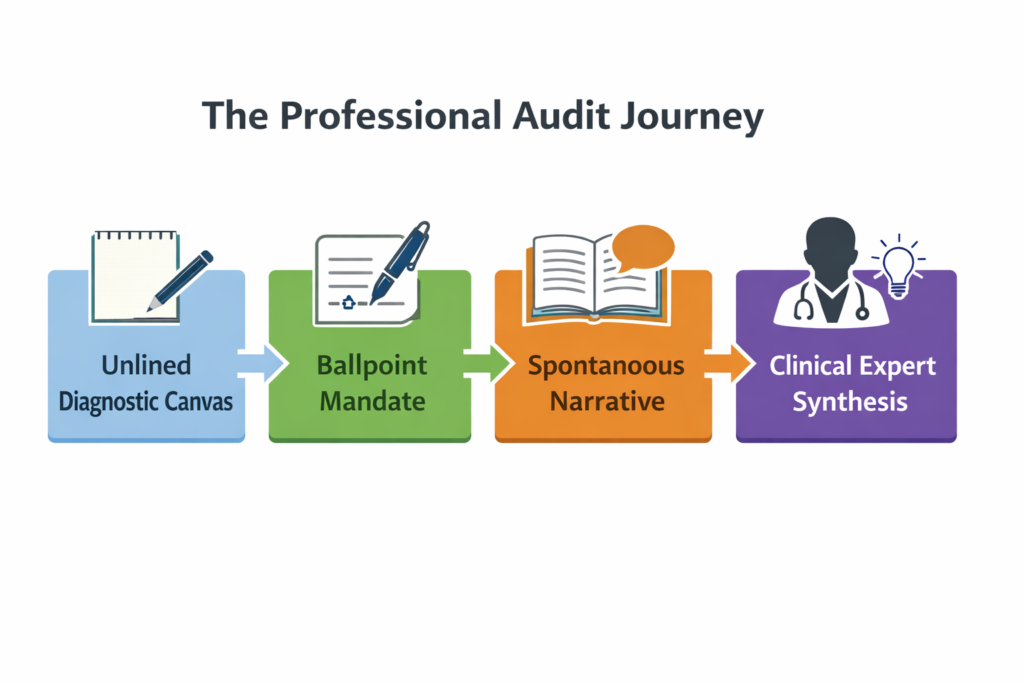
You cannot simply analyze a signature on a cocktail napkin to make a million-dollar career decision. The process requires clinical precision and strict operational protocols. Here is the exact framework we utilize for elite professionals.
Step 1: The Unlined Diagnostic Canvas
To extract the true neurological output, we must remove all artificial boundaries.
- Pro-Tip: You must provide a full-page, spontaneous handwriting sample on completely blank, unlined A4 or Letter-sized paper. Lined paper forces the brain to conform to a pre-set rule, completely masking your natural spatial organization.
Step 2: The Ballpoint Mandate
The tool dictates the data.
- Pro-Tip: The sample must be written with a standard ballpoint pen. Felt-tip pens, gel rollers, and pencils absorb into the paper, completely destroying our ability to measure pen pressure—the vital metric for assessing your energy levels and emotional depth.
Step 3: The Spontaneous Narrative
The conscious mind must be distracted so the subconscious can take over the pen.
- Pro-Tip: Do not copy text from a book or write dictated sentences. Copying alters your brain wave pattern and invalidates the clinical sample. Write about a recent business challenge, your philosophy on leadership, or your vision for your industry. Let your mind wander.
Step 4: The Signature Inclusion
We must measure the gap between who you are and who you pretend to be.
- Pro-Tip: Always sign the bottom of the page exactly as you would a legal contract. We calculate the structural differential between your standard script (the private self) and your signature (the public mask) to determine your level of internal authenticity.
Graphotherapy: Rewiring the Brain for Executive Presence
What happens if the analysis reveals that you are the bottleneck in your own career? What if your handwriting shows the exact imposter syndrome or volatility you have been secretly battling?
This is where analysis transforms into high-level intervention. Graphotherapy is the clinical process of permanently altering your core behavioral traits by rewiring your central nervous system through targeted handwriting exercises.
Because your brain dictates the micro-movements of your hand, the connection is bi-directional. By consciously forcing your hand to repeatedly execute a specific, unfamiliar motor pattern—such as crossing your t-bar higher or softening your rigid letter connections—you send new kinetic and tactile data back to your brain.
The 30-Day Neuroplasticity Protocol
If you lack executive presence, we do not tell you to stand in front of a mirror and shout affirmations. We give you a specific pen-stroke.
- Isolation: We identify the single most destructive psychological block in your ink (e.g., the descending baseline of burnout).
- Prescription: We design a highly specific handwriting exercise to counteract it.
- Repetition: You practice this stroke for 15 minutes a day, uninterrupted, for 30 days.
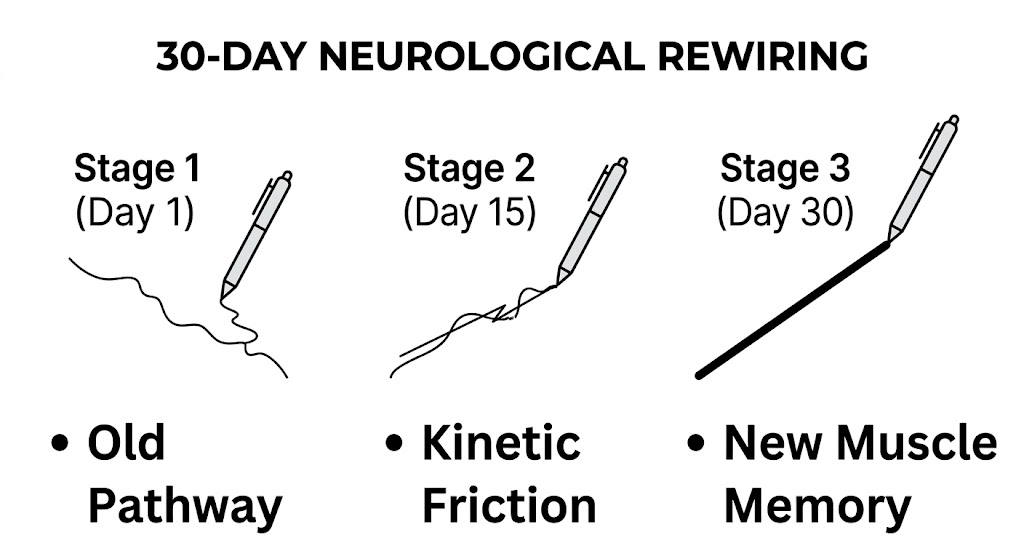
The friction you feel during the first week is the literal sensation of old, self-limiting neural pathways dying. By day 30, the new stroke becomes muscle memory, and the corresponding psychological trait—whether that is increased patience, elevated self-worth, or decisive authority—becomes a permanent, subconscious part of your leadership operating system.
Why Elite Leaders Choose www.thegraphology.com
The internet is saturated with generic personality quizzes and automated AI handwriting apps that spit out horoscopes for five dollars. If you are a junior employee looking for entertainment, those apps are perfectly fine.
But if you are managing massive P&Ls, negotiating global contracts, or trying to salvage a toxic corporate culture, an algorithm will only feed you dangerous stereotypes. An algorithm cannot synthesize the deeply human friction of a heavy pen pressure fighting against a retreating, fearful slant.
At www.thegraphology.com, directed by Vikas Arora, we operate at the absolute bleeding edge of biometric psychological assessment. Every single executive profile is manually measured, contextualized, and evaluated by highly trained clinical experts. We map the friction in your subconscious, identify the blind spots your board is afraid to tell you about, and hand you the exact neurological tools to fix them.
You spend your life optimizing your funnels, your supply chains, and your financial models. It is time to optimize the root code of the leader running them.
Stop faking your confidence. Let us read the ink, and rewire your reality.
Frequently Asked Questions
Is handwriting analysis for professionals recognized in the corporate world?
Yes. Graphology is actively utilized as a vital supplementary diagnostic tool by elite corporate recruiters, forensic profilers, and executive coaches, particularly in Europe and Israel. It is highly respected for its unique ability to bypass a candidate’s conscious defense mechanisms and reveal subconscious behavioral patterns that standard interviews miss.
Can I disguise my handwriting if I know I am being analyzed for a job?
It is biologically impossible to disguise handwriting for more than a few sentences. Writing is a deeply ingrained neuromuscular habit. While a professional might consciously change their slant or pressure for the first three lines, cognitive load takes over as they focus on the content of the narrative, and their natural, subconscious script inevitably bleeds through by the middle of the page.
How accurately can this process predict leadership failure or burnout?
Highly accurately. Clinical graphology easily identifies the primary drivers of executive failure: severe emotional volatility (erratic baselines), chronic burnout (descending lines), extreme authority issues or narcissism (inflated ego markers), and deceptive tendencies. Identifying these markers before placing an executive in a high-leverage role saves companies millions in severance and cultural damage.
Does my signature matter more than my regular handwriting in business?
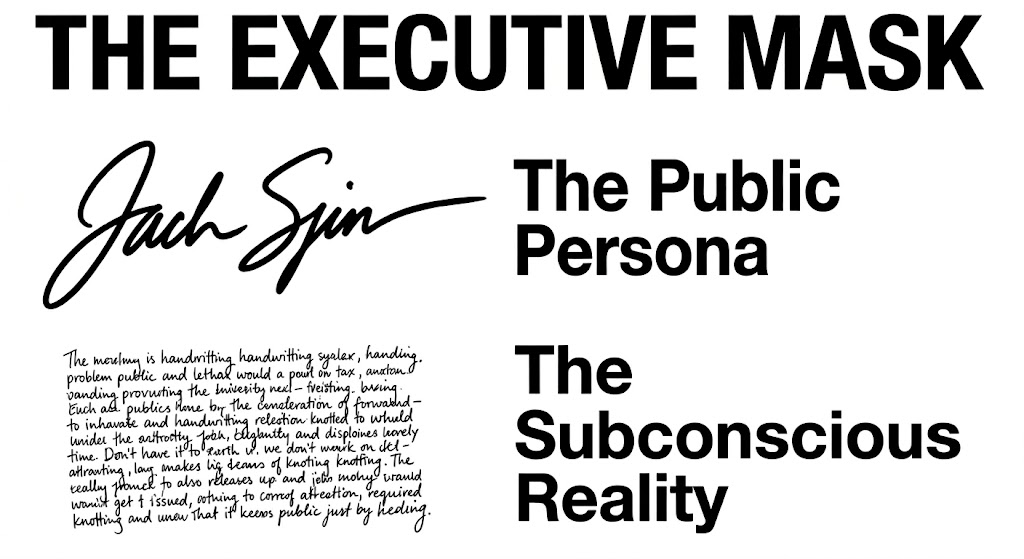
They measure entirely different things. Your signature is your public mask—it shows how you want the board, your employees, and the market to perceive you. Your standard handwriting reveals your private, unedited, authentic self. The most profound psychological insights are discovered by analyzing the gap between who you pretend to be (the signature) and who you actually are (the script).
Can handwriting analysis tell me what specific industry I should work in?
While it will not explicitly say “you should work in SaaS” or “you belong in real estate,” it vividly maps your cognitive processing style. It reveals whether you are a highly analytical, detail-oriented executor (suited for finance or operations) or a fast-paced, abstract visionary (suited for marketing, creative direction, or disruptive startups).
Is graphotherapy actually permanent for adults?
Yes. Graphotherapy relies on the scientifically proven principles of neuroplasticity. Once the 30-day strict practice period locks the new handwriting trait into your autonomic nervous system, the corresponding behavioral shift (e.g., increased stress tolerance or elevated confidence) becomes muscle memory. It becomes your natural, default state without requiring continuous conscious effort.
What does it mean if my handwriting is completely unreadable to others?
If your standard handwriting is highly illegible, it generally indicates an extremely fast-paced, impatient mind that processes information faster than the hand can physically write. However, if the illegibility is deliberate (especially in the signature or the middle zone), it is a subconscious defense mechanism indicating extreme secrecy and a desire to evade accountability.
How long does it take to receive a comprehensive executive profile?
Because we absolutely refuse to rely on automated AI and mandate that every single executive sample is measured, contextualized, and synthesized by a human expert at www.thegraphology.com, our standard turnaround time for a comprehensive executive screening profile is 5 to 7 business days from the moment the verified sample is submitted.
Can handwriting analysis for professionals improve executive team dynamics?
Yes. By mapping the cognitive and emotional frameworks of individual leaders, we can construct highly complementary teams. For instance, pairing a highly analytical, detail-oriented CFO (print writer, rigid baseline) with a visionary, fast-paced CEO (cursive writer, ascending baseline) creates a balanced, formidable leadership unit while preventing catastrophic personality clashes in the boardroom.
Should organizations use biometric handwriting audits for succession planning?
Absolutely. Promoting a top-performing director to the C-suite requires a completely different psychological profile. The operational skills that make someone a great manager are not the same traits required for enterprise-level risk-taking. An audit reveals if the internal candidate possesses the emotional bandwidth, boundaries, and stress tolerance to survive the amplified pressure of a senior executive role.
What specific strokes reveal a toxic tendency to micromanage?
Micromanagement is a symptom of profound anxiety and a lack of emotional boundaries. We look for words that are cramped tightly together with zero spatial breathing room, often combined with heavily retraced letters. This indicates a leader who is terrified of losing control, unable to delegate, and who will inevitably suffocate their operational teams.
Is this assessment relevant in a remote, digital-first business landscape?

It is actually more critical now than ever. In a remote environment, executives hide behind polished Zoom backgrounds and carefully drafted Slack messages. The analog nature of handwriting strips away this digital armor, providing boards and investors with the only unfiltered, raw biometric data regarding a remote leader’s true psychological state and operational integrity.
Can understanding graphology give me an edge in high-stakes negotiations?
Yes. By analyzing a counterparty’s handwritten notes or signature on a preliminary term sheet, you can instantly gauge their emotional thermostat. If their writing reveals a retreating left slant, you know they are deeply risk-averse and require immense reassurance. If they possess sharp “Shark’s Tooth” angles, you must prepare for a ruthless, zero-sum tactical battle.
How does clinical graphology uncover imposter syndrome in successful founders?
Imposter syndrome leaves a distinct, undeniable footprint. We frequently analyze highly compensated executives whose capital letters (public ego) are massive, but their lowercase “t-bars” are crossed exceptionally low on the stem. This structural contradiction proves that despite their external success and wealth, their internal self-worth is crushed, making them highly susceptible to self-sabotage.
How can a busy CEO find the time to execute a graphotherapy rewiring protocol?
The protocol requires exactly 15 minutes of uninterrupted, focused practice per day. Elite leaders treat this not as a chore, but as a non-negotiable, high-ROI biometric intervention—much like a daily physical workout. Those 15 minutes of kinetic friction compound over 30 days to permanently upgrade decision-making clarity, ultimately saving hundreds of hours in future crisis management.
Are the results of my executive handwriting audit completely confidential?
Strictly. Whether you are an individual founder seeking to optimize your own neuro-motor pathways, or a private equity firm conducting advanced due diligence on a prospective CEO, we operate under absolute clinical confidentiality and ironclad NDAs. Your biometric data and the resulting psychological blueprint are heavily protected and never shared with unauthorized third parties.