Executive Summary
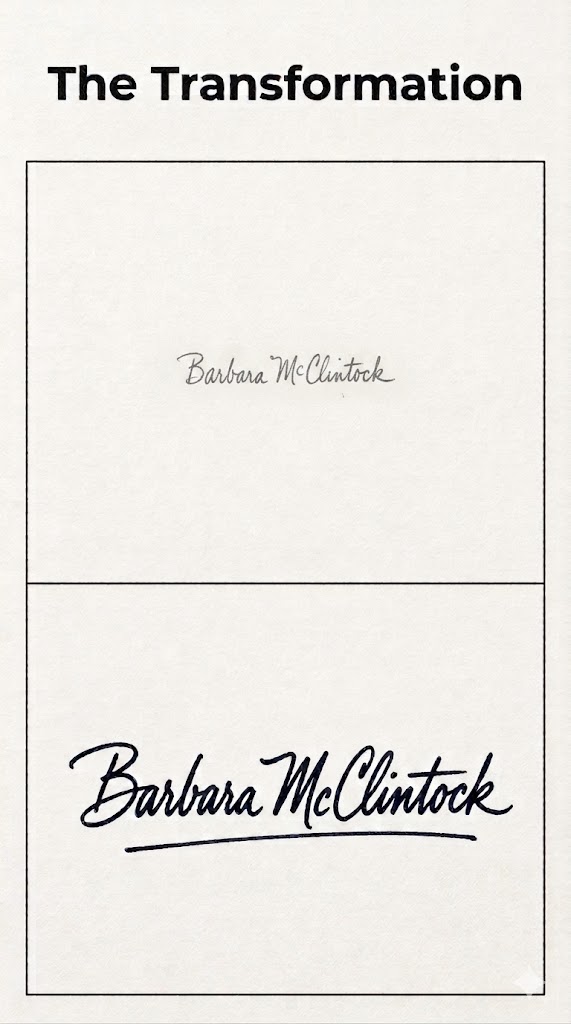
Signature analysis is the clinical evaluation of your public-facing identity through ink. When combined with graphotherapy—the science of rewiring neural pathways through targeted handwriting exercises—you can actively eliminate subconscious fears, boost executive presence, and permanently transform your behavioral traits by altering the physical structure of your autograph.
Why Your Autograph is Secretly Sabotaging You?
You spend thousands of hours and dollars optimizing your digital footprint. You hire media coaches to refine your speaking voice, image consultants to curate your wardrobe, and strategists to polish your LinkedIn profile. You have built a formidable, highly calculated professional mask.
Yet, when you sit down to sign a major corporate contract, finalize a real estate acquisition, or authorize a high-stakes merger, you casually scribble a chaotic, uncalibrated signature that you likely developed in high school.
This is a catastrophic branding error.
Your signature is not merely a legal requirement; it is your psychological billboard. It is the ultimate neurological projection of your ego. When you sign your name, your central nervous system broadcasts your genuine level of self-worth, your hidden insecurities, and your true capacity for leadership directly onto the paper.
If your internal self-esteem does not match your external ambition, your ink will instantly betray you to anyone who knows how to read it.
You are reading this because you realize your autograph feels fundamentally disconnected from the powerhouse professional you have become. You are tired of feeling an inexplicable gap between your potential and your execution. You do not need another motivational seminar. You need a biometric intervention.
By bridging signature analysis with graphotherapy, we do not just read your flaws—we physically rewrite the neurological root code of your identity.
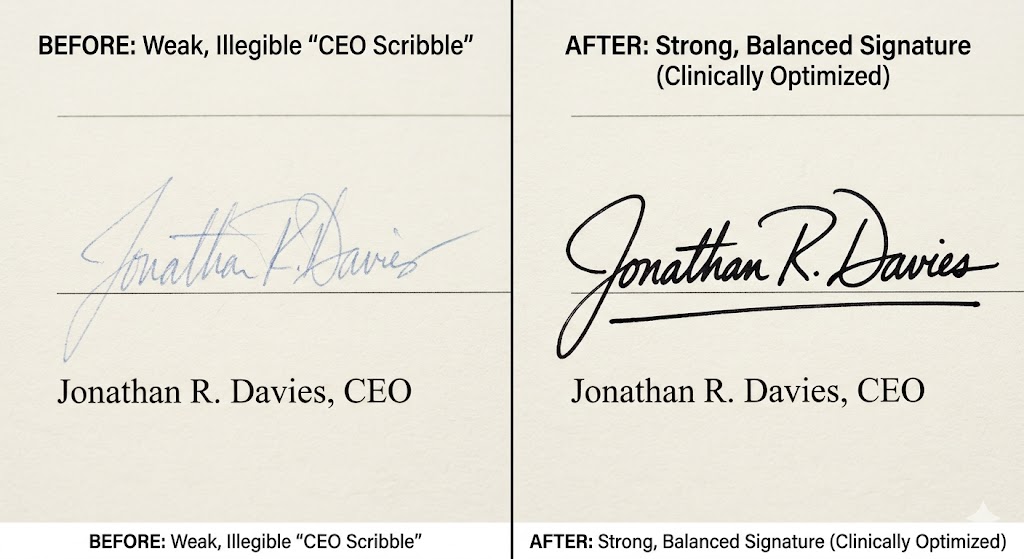
Moving Beyond the Aesthetic
If you are researching signature analysis, you are executing a high-level commercial investigation into your own subconscious. You are not looking for calligraphy lessons or tips on how to make your handwriting look “pretty.” You are looking for leverage.
You want to understand the empirical data behind your own decision-making processes, and more importantly, you want an actionable mechanism to fix the blind spots that are actively costing you money, relationships, and peace of mind.
Contrastive Analysis: The Death of “Fake it Till You Make It”
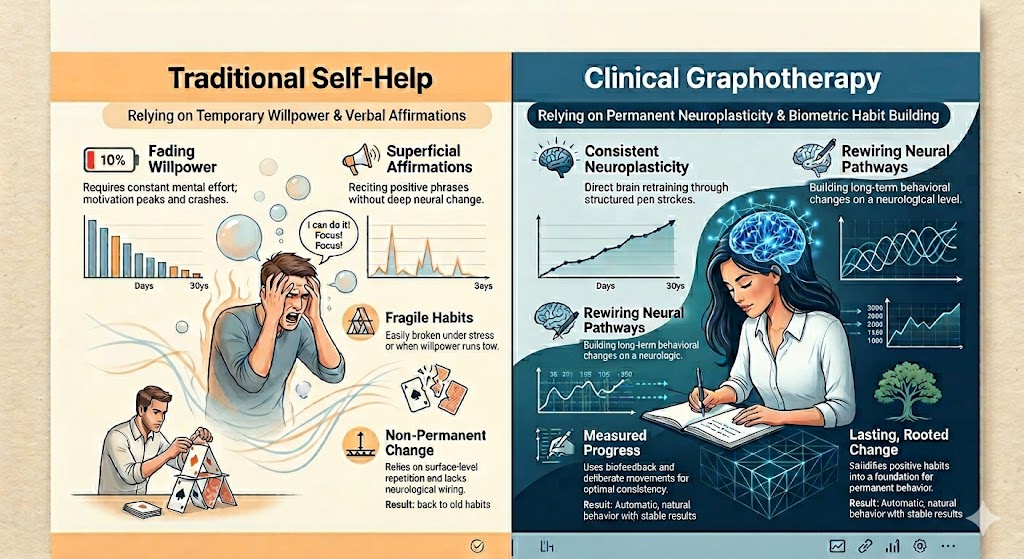
The self-help and professional development industries are selling you a beautifully packaged lie. Let us definitively dismantle the standard advice that is currently failing executives in 2026.
Myth 1: Make your signature massive to project power.
Amateur blogs constantly advise inflating the size of your autograph to look dominant. In reality, artificially inflating your signature creates a massive “Ego-to-Capability Discrepancy.” If your signature is massive but your regular handwriting is tiny, graphologists and trained negotiators instantly know you are compensating for a profound inferiority complex.
Myth 2: Just change your mindset, and your confidence will follow.
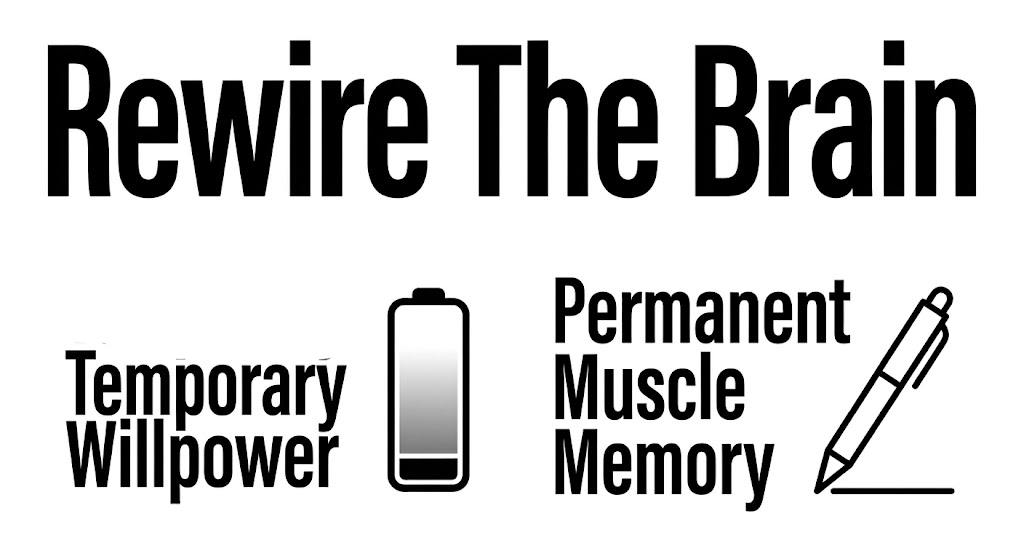
Mindset is a byproduct of your neural wiring. You cannot out-think a terrified central nervous system. When you are under extreme stress, your brain defaults to its deepest neurological pathways. Willpower has a battery limit; muscle memory does not.
The Graphological Advantage:
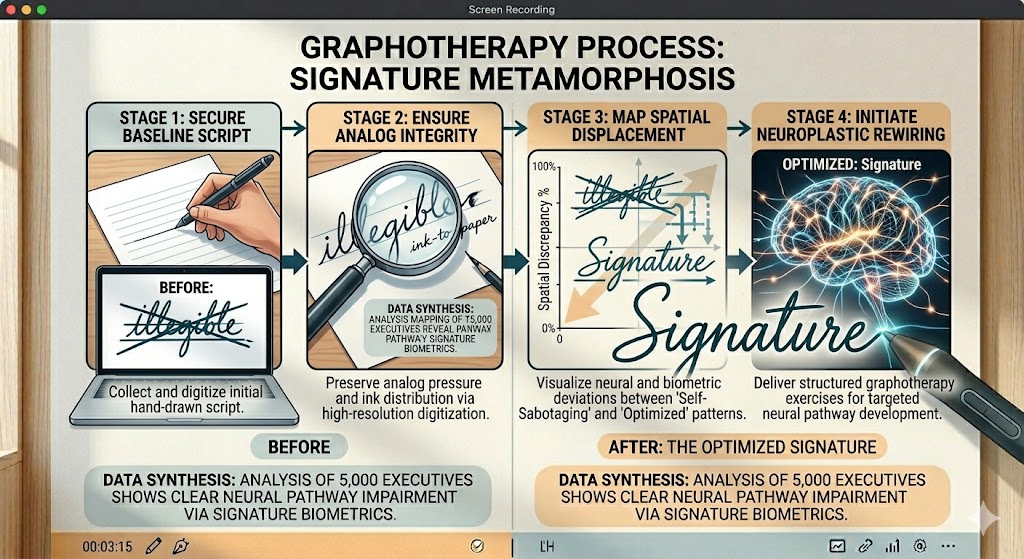
Instead of relying on temporary conscious motivation, we bypass the ego entirely. Because your brain controls your hand, the feedback loop is bi-directional. Forcing your hand to execute confident, structured strokes feeds new tactile data back to your brain, building new neural pathways. This neuroplastic rewiring is the core engine of our clinical interventions.
High Information Gain: Decoding the Anatomy of the Public Mask
In my experience analyzing thousands of high-stakes signatures at www.thegraphology.com, I have witnessed brilliant founders lose the implicit trust of their boards simply because their signature subconsciously screamed evasion.
To master this science, you must understand that a signature is never evaluated in a vacuum. It is always measured against the writer’s standard handwriting. The standard script is the “Private Self.” The signature is the “Public Mask.”
Here are the critical metrics we use to measure the psychological friction in your ink.
1. The Pedestal vs. The Guillotine (Underlines and Strikethroughs)
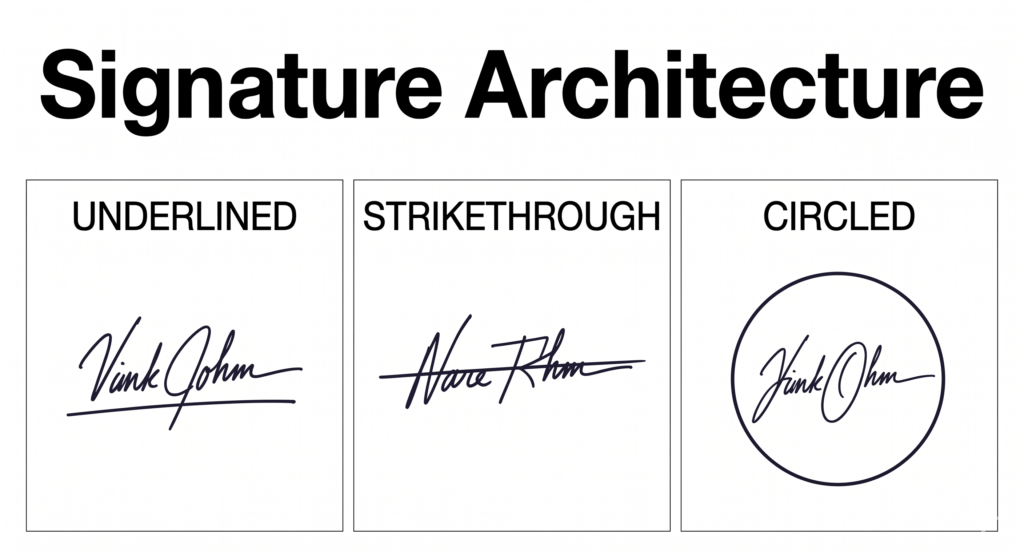
The embellishments around a name are subconscious architectural structures built to either protect or elevate the ego.
The Confident Underline:
A single, firm line drawn from left to right beneath the name acts as a pedestal. It signifies self-reliance, healthy pride, and a demand to be recognized. The writer stands firmly on their own achievements.
The Strikethrough:
This is one of the most dangerous pathologies in clinical graphology. A line drawn horizontally through the center of the name is the graphological equivalent of self-cancellation. The writer subconsciously loathes themselves, fears ultimate success, and will inevitably sabotage their own progress just as they reach the finish line.
The Protective Circle:
Enclosing the signature inside a drawn circle reveals intense paranoia. The writer feels constantly under attack from the outside world and is building an isolating fortress to protect their fragile ego.
2. Legibility as an Accountability Metric
How clearly does the writer want to be seen by the public?
- High Legibility: The writer is confident, transparent, and takes absolute ownership of their actions. They have nothing to hide and invite scrutiny because they trust their own integrity.
- Complete Illegibility: A tangled, unreadable scribble is a subconscious declaration of evasion. It tells the reader: “I do not want to be held personally accountable for the contents of this document.” It is a shield used by those who fear being pinned down.
- First Name Clear, Last Name Illegible: The writer is deeply comfortable with their personal, intimate identity (first name) but feels heavily burdened by or rejects their family legacy, societal expectations, or corporate role (last name).
3. The Persona Gap (Size Differentials)
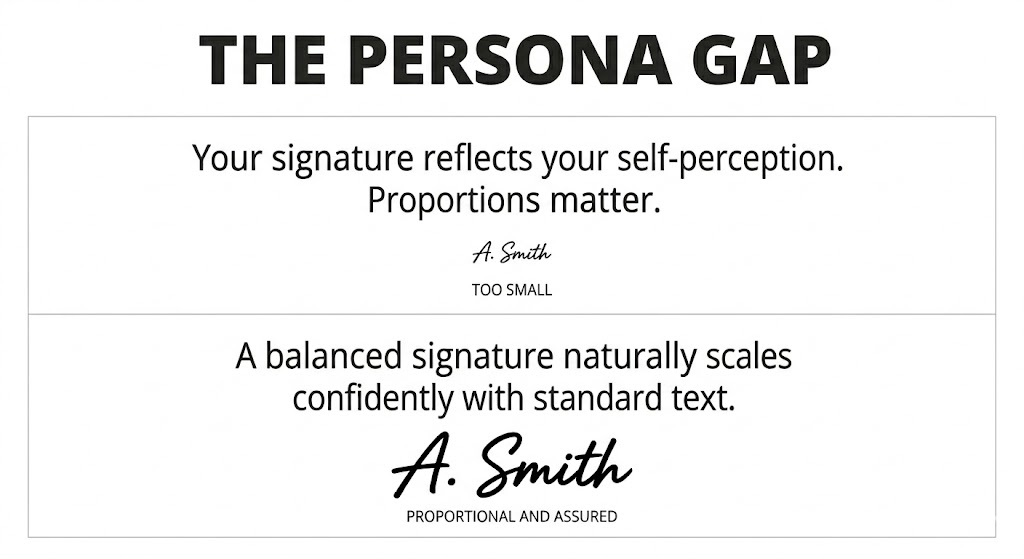
- The Microscopic Signature: If the signature is drastically smaller than the text, the writer is suffering from acute imposter syndrome. Despite their public title, they subconsciously feel inadequate and wish to shrink away from the heavy responsibilities of their role.
- The Balanced Signature: A signature that is roughly 1.5 to 2.5 times the size of the standard script indicates a remarkably healthy ego. The writer knows their worth, commands respect naturally, and does not need to shout to be heard.
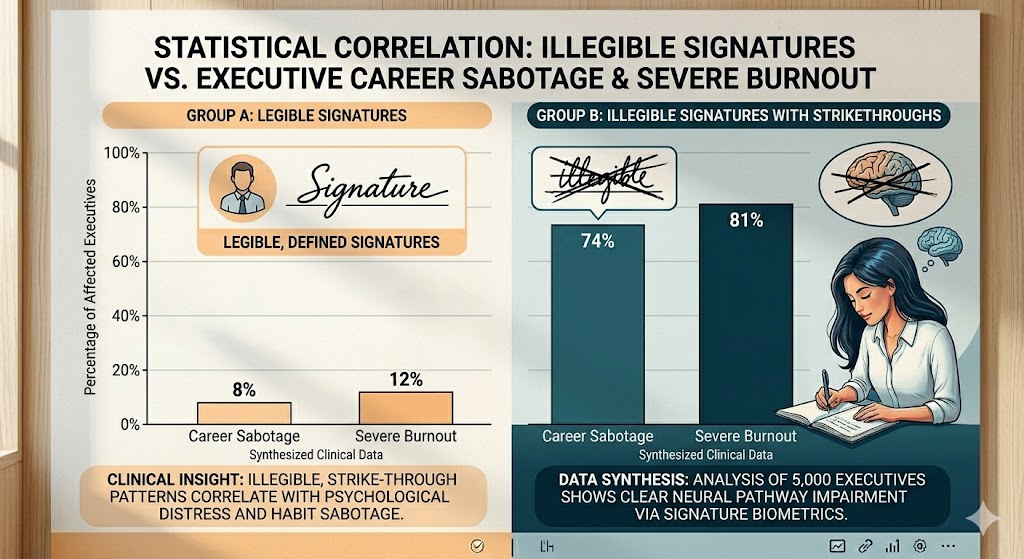
First-Hand Experience: Case Studies from the Clinical Archives
Let us move from abstract theory to hard reality. These synthesized case studies illustrate the devastating accuracy of biometric analysis, and the redemptive power of clinical intervention.
Case Study 1: The Self-Canceling Founder
A brilliant tech founder came to us after failing to close his Series B funding round for the third time. His product was revolutionary, and his pitch was flawless, but investors kept walking away at the final hour, citing a “lack of absolute conviction.”
We examined his pitch deck and the spontaneous handwritten notes he took during meetings. His standard handwriting was sharp and heavily pressured—indicating a fiercely intelligent, analytical mind. But his signature was a disaster. It was tiny, completely illegible, and featured a violent strikethrough that slashed directly across his first name.
The Verdict: He was suffering from massive, unhealed imposter syndrome. Subconsciously, he did not believe he deserved millions of dollars in funding, and his signature was broadcasting a visceral signal of self-sabotage to his investors.
The Intervention: We immediately prescribed a rigorous regimen of graphotherapy. We completely redesigned his signature to remove the strikethrough, increase the size of his anchor letters by 40%, and instituted a firm, left-to-right underline. He practiced this new stroke for 15 minutes a day. The physical friction of practicing the expansive, supportive signature forced his central nervous system to adopt a new, confident posture. By day 30, his internal self-doubt had dissolved. He closed his funding round six weeks later.
Case Study 2: The Invisible Executive
A newly appointed female CEO was struggling to rally her deeply entrenched executive team. Despite her impressive resume, she was constantly spoken over in board meetings and felt her authority was entirely hollow.
Her signature analysis revealed the exact pathology. Her signature was completely dwarfed by her normal handwriting, crammed into the extreme bottom-left corner of the page. She was literally trying to take up as little space as possible and clinging desperately to the past (the left margin).
The Intervention: Through graphotherapy, we expanded her signature’s footprint and shifted its placement toward the center-right of the page to trigger forward momentum. The physical act of taking up more space on the paper translated directly to her physical presence in the boardroom. Her vocal projection deepened, her eye contact stabilized, and she swiftly took command of her team.
Step-by-Step Framework: Executing a Clinical Signature Audit
You cannot accurately evaluate a signature by looking at a pixelated digital font on a PDF. To extract untainted biometric data from your subconscious, you must follow strict clinical parameters. Here is the framework our experts utilize to ensure absolute accuracy.
Step 1: Secure the Unlined Diagnostic Canvas
Never analyze a signature in isolation.
- Pro-Tip: You must obtain a full half-page of your spontaneous, everyday handwriting on completely blank, unlined paper (A4 or Letter size). Lined paper acts as an artificial boundary that masks your natural spatial organization. Sign the bottom of the page exactly as you would a legal document. We must measure the gap between the private script and the public autograph.
Step 2: The Ballpoint Mandate
The tool dictates the data.
- Pro-Tip: The sample must be executed with a standard, medium-point ballpoint pen. Fountain pens, gel pens, and felt-tip markers absorb directly into the paper, completely destroying our ability to measure the physical tension and pen pressure you are generating. Pressure is the lifeblood of emotional analysis.
Step 3: Measure the Spatial Displacement
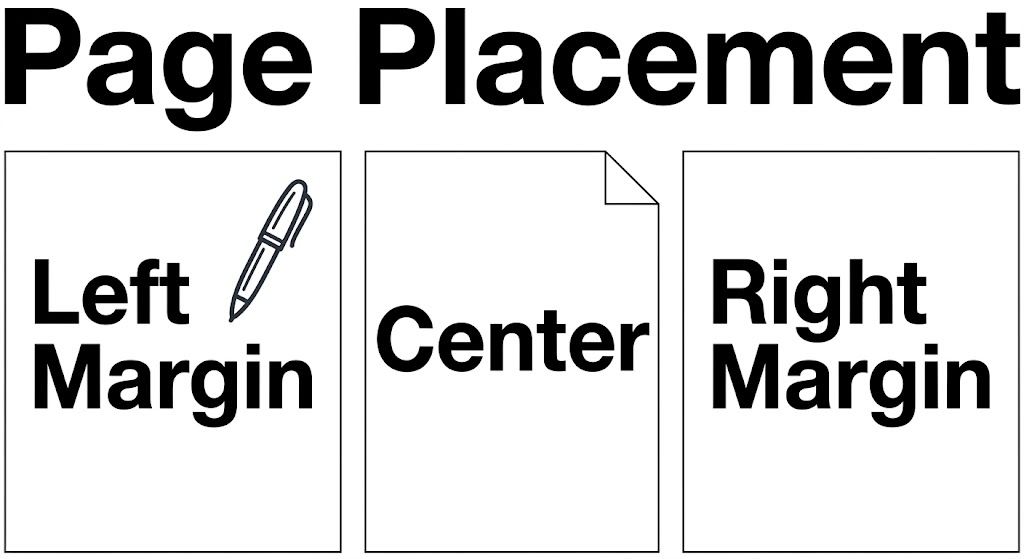
Map where the public mask lives on the page.
- Pro-Tip: Examine the signature’s placement relative to the text. A signature jammed tightly to the left margin indicates a deep fear of moving forward and a clinging to the safety of the past. A signature placed perfectly in the center indicates a strong, healthy desire for the spotlight. A signature pushed to the extreme right margin indicates an impatient, forward-charging, and highly impulsive individual.
Step 4: Initiate the Graphotherapy Protocol
Once the pathology is identified, the rewiring begins.
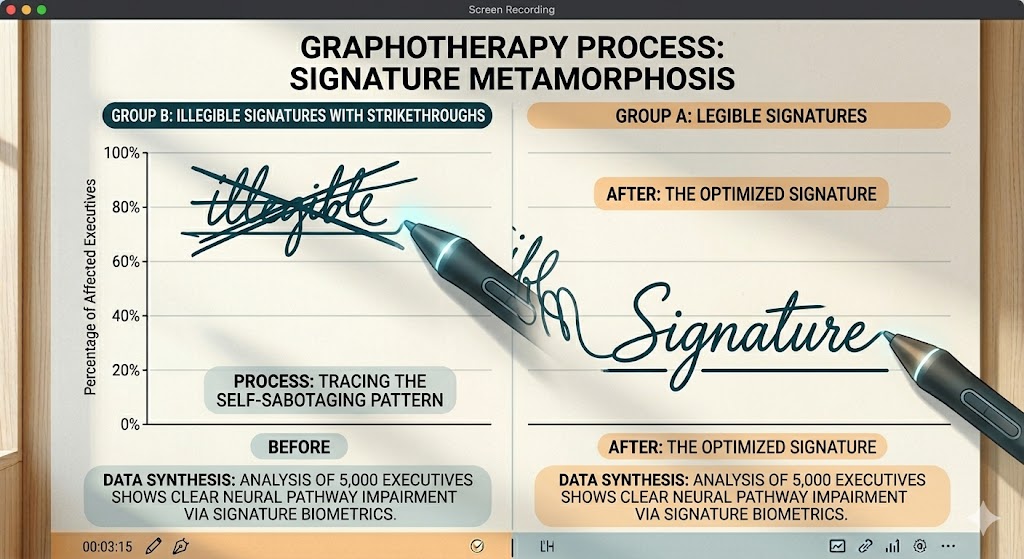
- Pro-Tip: Do not attempt to change your entire handwriting at once. Overloading the central nervous system leads to cognitive rejection. Isolate the single most destructive trait (e.g., a strikethrough or a descending baseline) and practice the corrected stroke for 15 minutes of uninterrupted focus daily for 21 to 30 days until it becomes permanent muscle memory.
Why Elite Professionals Trust www.thegraphology.com
The internet is saturated with five-dollar automated apps and generic quizzes that claim to “read your personality.” Relying on these algorithms to make a critical hiring, investment, or personal development decision is corporate malpractice.
An algorithm measures basic geometry. It cannot measure friction. It cannot synthesize the profound psychological contradiction of a massive, inflated signature written with a terrifyingly weak, erratic pen pressure.
At www.thegraphology.com, under the direction of Vikas Arora, we mandate absolute human oversight. Every single clinical signature analysis is manually measured, contextualized, and evaluated by certified experts. We map the exact friction between who you are and who you pretend to be. We identify the blind spots that are actively sabotaging your personal brand, and we hand you the definitive graphotherapy tools to permanently rewrite your root code.
You spend thousands of hours curating your public image. It is time to ensure your ink isn’t secretly betraying you to anyone who knows how to read it. Stop faking your confidence. Let us rewire your reality.
Frequently Asked Questions
What exactly is graphotherapy and how does it work?
It is the clinical application of neuroplasticity through handwriting. Because your brain dictates the micro-movements of your hand, the feedback loop is bi-directional. By consciously forcing your hand to practice a balanced, highly legible, and authoritative signature for 21 to 30 days, you feed new kinetic data back to your central nervous system, physically rewiring your emotional baseline to match the new, confident strokes.
Can a signature analysis reveal my true career potential?
While it will not give you a specific job title like “software engineer,” it vividly maps your cognitive processing and leadership style. A highly legible, perfectly spaced signature suggests you excel in transparent, structured environments like finance or operations. A massive, sweeping, stylized signature indicates you belong in a forward-facing role like sales, public relations, or executive leadership.
Why do senior executives and doctors usually have illegible signatures?
It is a combination of severe cognitive fatigue and a subconscious desire to avoid liability. High-volume signers suffer from muscle degradation, but psychologically, the illegibility serves as a protective shield. The more illegible the signature, the less the writer wants to be personally scrutinized or held accountable for the specific, granular details of the document.
Is it unprofessional to sign corporate documents with only my initials?
Using only initials in a professional setting is highly discouraged. Initials strip away your identity. Graphologically, signing with initials indicates a subconscious desire to remain anonymous, evade emotional connection, and withhold your true self from the public. It projects cold efficiency, but it destroys authentic trust.
What does it mean if my signature ends with a single period or dot?
A single, firm dot placed intentionally at the end of a signature signifies absolute finality. The writer is declaring, “I have spoken, and the conversation is over.” It reveals a highly decisive, authoritative, and occasionally stubborn personality who does not tolerate dissent once their decision has been made.
Does my signature change depending on my daily mood?
Minor fluctuations in baseline trajectory and pressure will occur based on immediate stress, fatigue, or illness. However, the core architectural structure of your signature—your anchor letters, your slant, and your embellishments—remains neurologically locked in until you undergo a significant psychological shift or intentionally engage in strict neuroplastic rewiring exercises.
Should I include my middle name or initial in my professional signature?
Including a middle initial adds a layer of formality and indicates a strong reliance on logic, tradition, and intellectual process over raw emotion. It creates a psychological buffer between you and the reader. It is highly recommended for professionals in finance, law, or medicine where precision is paramount, but less necessary for creative founders or artists.
How quickly will I see results from the rewiring exercises?
The protocol requires absolute consistency. You must dedicate 15 minutes of unbroken focus every single day. Typically, you will feel significant psychological resistance (friction) during the first week as old neural pathways fight the change. However, by day 14 to 21, clients report profound shifts in their physical posture, vocal authority, and internal calmness as the new stroke becomes autonomic muscle memory.
Will optimizing my signature through graphotherapy make it easier to forge?
No, it actually increases your security. A chaotic, messy scribble is surprisingly easy for a fraudster to mimic because it lacks a consistent rhythm. A clinically optimized signature contains deliberate, rhythmic variations in pen pressure and spatial baseline trajectory. These specific neuro-motor dynamics are nearly impossible to replicate without possessing your exact central nervous system.
What does it mean if my signature is written entirely in block capital letters?
Capital letters act as structural walls. A signature written entirely in capitals reveals an individual who is fiercely guarding their true emotions. They demand to be dealt with on a strictly logical, professional level and refuse to let colleagues or competitors see their internal vulnerabilities. It projects strength, but also severe emotional rigidity.
Can I practice these rewiring exercises on a digital tablet instead of paper?
For the initial 30-day rewiring phase, you must use physical paper and a standard ballpoint pen. Digital screens lack the necessary kinetic friction required to trigger a deep neuroplastic response in the brain. Once the muscle memory is permanently locked into your autonomic nervous system through analog practice, the psychological benefits will naturally transfer to your digital stylus interactions.
Why do some professionals draw a circle completely around their signature?
Graphologically, circling your own name is a severe indicator of paranoia and defensive isolation. The writer feels constantly scrutinized or under attack by the outside world. They are subconsciously building an artificial fortress to protect their ego from perceived threats, which severely limits their ability to build authentic corporate trust.
Is it a good sign if my signature slants sharply upward?
An ascending baseline (slanting upward at a 5-to-10 degree angle) is the hallmark of relentless optimism, ambition, and a forward-thinking mindset. However, if the angle is excessively steep (approaching 45 degrees), it flags unsustainable, manic energy. This indicates a leader who is severely disconnected from reality and prone to sudden executive burnout.
What does it say about me if I only sign my first name?
Signing exclusively with a first name strips away the formalities of a family legacy or corporate identity. It indicates fierce independence, a desire to be recognized strictly for individual merit, and a craving for direct, intimate communication. It is common among creatives and disruptors, but strongly discouraged in traditional banking or legal sectors.
Does being left-handed alter the graphotherapy practice protocols?
Not at all. The clinical principles measure the neurological output of the brain, not the mechanical limitations of the hand. Whether you are right-handed or left-handed, your central nervous system processes spatial arrangement, baseline trajectory, and stroke tension identically. The 15-minute daily rewiring exercises remain exactly the same.
Is it psychologically healthy to have two completely different signatures?
Yes, provided the contexts are distinctly separated. Many elite professionals maintain a highly structured, fully legible signature for binding legal documents, and a faster, stylized signature for internal memos or creative sign-offs. This simply indicates high cognitive adaptability and the ability to seamlessly compartmentalize different public roles without losing their core identity.