Executive Summary
Professional signature optimization is the clinical graphological process of auditing and redesigning an individual’s autograph to align with their highest executive potential.
By physically rewiring self-limiting strokes through neuroplastic graphotherapy, leaders project unshakeable authority, eradicate subconscious imposter syndrome, and engineer an authentic, high-trust public identity.
The Hidden Liability in Your Corporate Arsenal
You meticulously curate every facet of your executive presence. You invest heavily in bespoke tailoring, you retain speech coaches to refine your vocal cadence, and you obsess over the strategic framing of your corporate communications.
Yet, at the absolute climax of your most critical business transactions—signing a multi-million-dollar merger, authorizing a board resolution, or finalizing a high-stakes partnership—you casually scribble a chaotic, uncalibrated autograph that you likely adopted in high school.
This is a catastrophic branding failure.
Your signature is not a mundane administrative chore; it is your ultimate psychological billboard. When you uncap a pen and sign your name, your central nervous system bypasses your heavily guarded ego.
It broadcasts your authentic level of self-worth, your hidden anxieties, and your true capacity for transparent leadership directly onto the parchment. If your internal self-esteem does not match your external title, your ink will instantly betray you to anyone who knows how to decode it.
Now, you realize that your current autograph feels fundamentally inadequate compared to the powerhouse professional you have become.
In fact, you do not need calligraphy lessons; you need a biometric intervention. Through the rigorous science of professional signature optimization, we do not merely redesign how your name looks—we physically rewire the neurological root code of your identity.
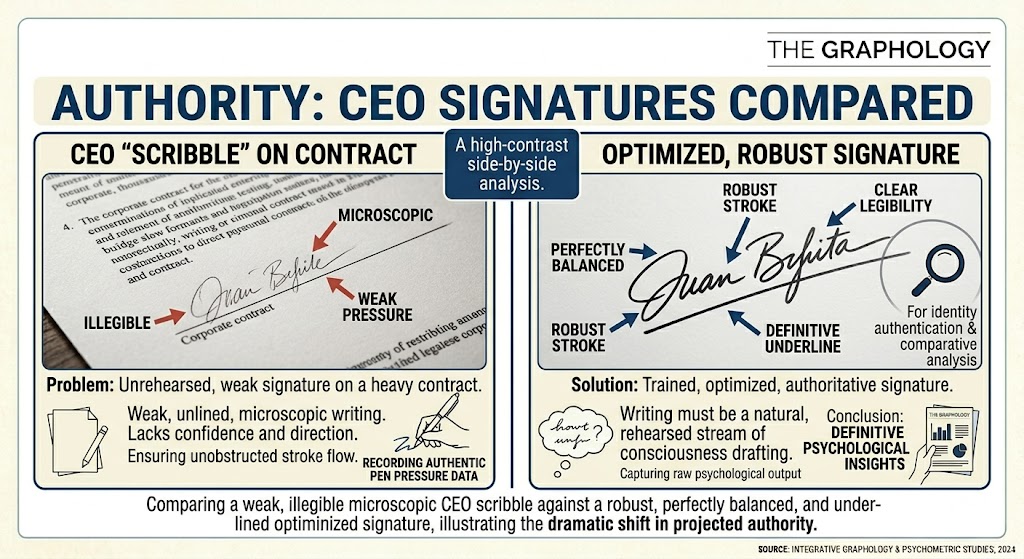
Why Elite Leaders Demand Biometric Alignment?
If you are researching this subject, risk mitigation and personal branding optimisation drive your intent. You are a high-level manager, founder, or public figure who understands that the smallest details yield the highest leverage.
In fact, you want empirical, data-driven strategies to ensure your public mask is not secretly sabotaging your trajectory. You demand an actionable framework to correct it.
The Myths Destroying Executive Credibility
To fully grasp the ROI of clinical optimization, we must first dismantle the toxic advice peddled by amateur image consultants currently failing the C-suite in 2026.
Myth 1:
A messy signature makes you look important and busy.
This is the most dangerous myth in corporate culture. Complete illegibility is a subconscious declaration of evasion. It tells the reader, “I refuse to be held personally accountable for the contents of this document.” If an investor or partner cannot read your name, your ink is projecting a lack of transparency and a desire to hide.
Myth 2:
Massive signatures project ultimate power.
Many junior executives artificially inflate the size of their signature to project dominance. Graphologically, a signature that is more than three times the size of the writer’s normal script flags extreme narcissistic compensation. It screams to the world that the writer is masking a profound, internal inferiority complex with loud, external bravado.
The Biometric Reality:
In my experience analyzing top-tier professionals, the most trusted and effective leaders possess signatures that naturally mirror the structure and pressure of their daily script. Authenticity is the ultimate power move.
At www.thegraphology.com, we measure the biometric friction in your ink to build a signature that demands respect without resorting to theatrical overcompensation.
The Biometric Anatomy of an Optimized Signature
A properly engineered signature is a complex matrix of neuro-motor data. To execute a professional signature optimization, we must audit and recalibrate four critical spatial and kinetic pillars.
Pillar 1:
The Pedestal Effect (Underlines and Boundaries)
Embellishments in a signature are never accidental. They are subconscious architectural structures built to either protect or elevate the ego.
The Executive Pedestal:
A single, firm line drawn from left to right beneath the signature acts as a pedestal. It signifies self-reliance, healthy pride, and an undeniable demand for recognition. The writer stands firmly on their own achievements and leads from the front.
The Self-Sabotage Guillotine:
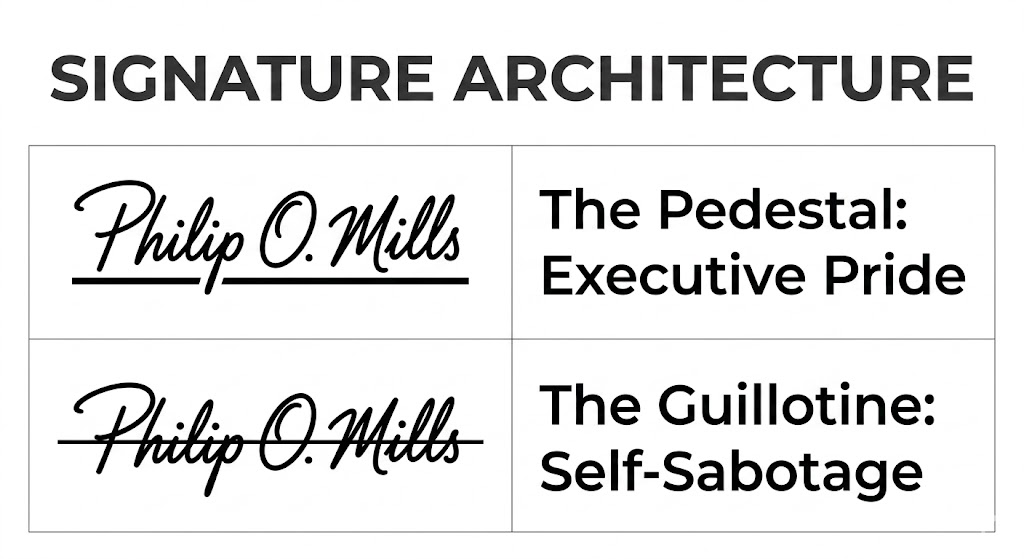
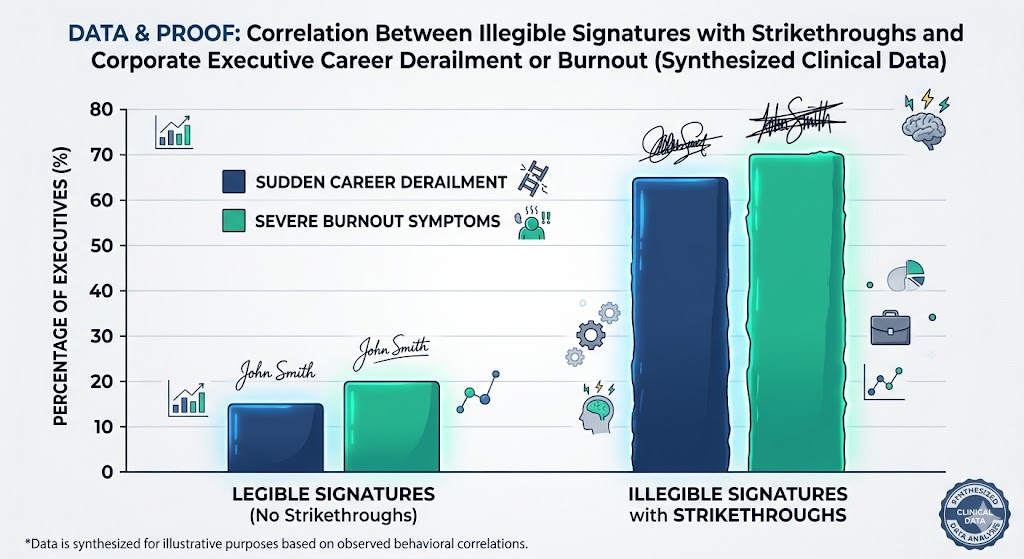
A line drawn horizontally through the center of the name (a strikethrough) is the graphological equivalent of self-cancellation. The executive subconsciously loathes themselves, fears ultimate success, and possesses a high probability of sabotaging their own progress right at the finish line.
The Isolation Loop:
Enclosing the signature inside a drawn circle or a massive, sweeping final letter reveals intense paranoia. The leader feels under attack from the market or their own board and is building an artificial, isolating fortress to protect their fragile ego.
Pillar 2:
Spatial Authority (The Size Differential)
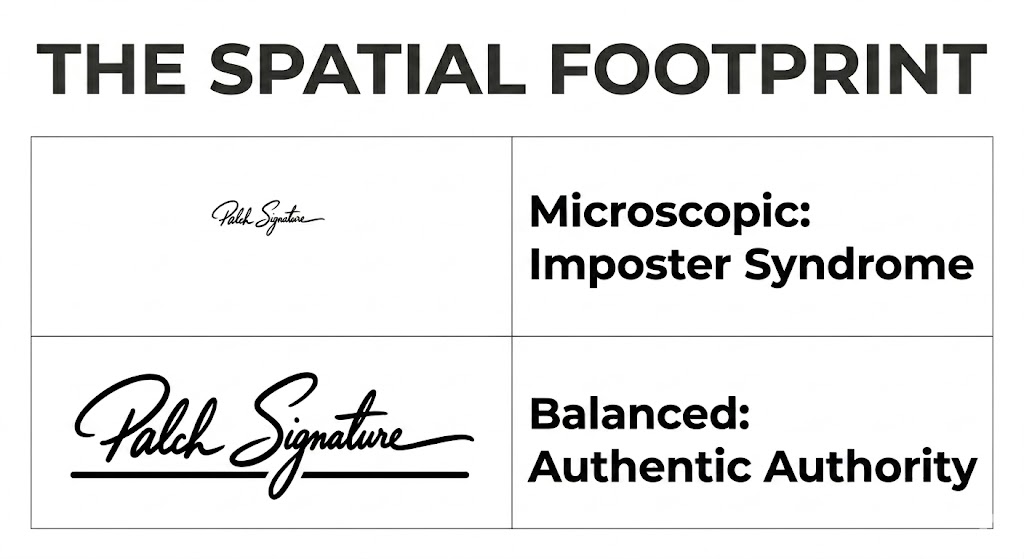
The physical footprint of the signature relative to the executive’s standard handwriting is the absolute metric of self-esteem.
The Microscopic Autograph:
If the signature is drastically smaller than the surrounding text, the leader is suffering from acute imposter syndrome. Despite their title and compensation, they subconsciously feel inadequate and wish to shrink away from the heavy, crushing responsibilities of their role.
The Balanced Authority:
An optimized signature should be roughly 1.5 to 2.5 times the size of the standard script (allowing for the natural height of capital letters). This indicates a remarkably healthy ego. The leader knows their intrinsic worth, commands respect organically, and does not need to shout to establish their presence.
Pillar 3:
The Transparency Index (Legibility Variables)
How clearly does the executive want to be seen by stakeholders?
Total Legibility:
The executive is confident, transparent, and takes absolute ownership of their strategic decisions. They invite scrutiny because their integrity is unshakeable.
First Name Clear, Last Name Illegible:
The leader is deeply comfortable with their intimate identity (the first name) but rejects or feels heavily burdened by their family legacy, societal expectations, or corporate obligations (the last name).
Last Name Clear, First Name Illegible:
The leader hides their true, vulnerable self behind the impenetrable armor of their corporate title or family status. They are emotionally distant but fiercely protective of their public legacy.
Pillar 4:
Kinetic Friction (Pen Pressure and Vitality)
Pressure is the lifeblood of the ink; it measures the depth of emotional intensity and physical drive.
The Aggressive Groove:
Extremely heavy pressure combined with sharp, “Shark’s Tooth” letter formations reveals a ruthless, dictatorial leadership style. They will drive short-term profits but completely destroy departmental morale due to a total lack of empathy.
The Optimized Flow:
Firm, consistent pressure paired with smooth, fluid connections indicates a leader with immense stamina who can execute difficult decisions without losing their humanity or alienating their executive team.
Case Studies in Autograph Engineering
Theory is fascinating, but tangible ROI is what matters in the boardroom. Here are two synthesized case studies from the clinical archives at www.thegraphology.com, directed by Vikas Arora, illustrating the transformative power of signature optimization.
Case Study 1:
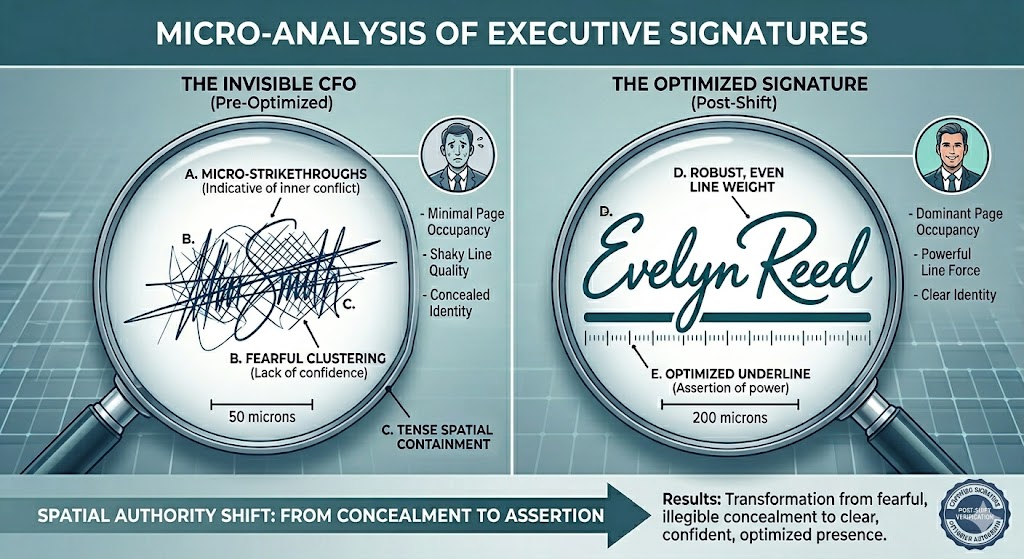
The Invisible CFO
A highly competent Chief Financial Officer was repeatedly passed over for the CEO position at a major logistics firm. His financial modeling was flawless, but the board cited a “lack of visionary presence” and felt he could not inspire confidence in shareholders.
Our audit of his biometric data revealed the exact pathology. While his standard script was highly organized and structured (perfect for a CFO), his signature was microscopic. It was crammed tightly into the lower-left corner of the signature block, dwarfed by the printed line beneath it.
The Clinical Verdict:
He suffered from massive imposter syndrome when stepping outside the safety of his spreadsheets. He was neurologically terrified of the CEO spotlight. We initiated a rigorous 30-day professional signature optimization protocol. We expanded the spatial footprint of his signature by 40%, centered its placement, and anchored it with a firm, left-to-right underline.
The Result:
The physical friction of practicing this expansive, authoritative stroke forced his central nervous system to adopt a new, dominant posture. By day 30, his internal self-doubt had dissolved. His physical presence in board meetings transformed. He commanded the room, held unwavering eye contact, and was successfully appointed CEO six months later.
Case Study 2:
The Toxic Founder’s Retreat
A venture capital firm requested a biometric audit of a charismatic tech founder before leading his Series C funding round. He was brilliant, but employee turnover was suspiciously high.
His signature was a graphological nightmare. It was five times larger than his regular script, leaned aggressively backward (a severe left slant), and his first name was entirely illegible, replaced by a tangled web of sharp angles.
The Clinical Verdict:
The VC firm had a major liability on their hands. The massive size indicated extreme narcissism, while the leftward slant proved he was deeply paranoid, secretive, and entirely walled off from feedback. The sharp angles confirmed a ruthless lack of empathy.
Before funding, they mandated executive coaching combined with our graphotherapy intervention. We worked with the founder to drastically reduce the size of the signature, smooth the sharp angles into collaborative “garland” connections, and shift the slant to a neutral, vertical position.
The initial resistance was intense—his ego fought the structural downgrade. But as the neuro-motor pathways shifted, his paranoia subsided. He began listening to his leadership team, employee retention stabilized, and the funding round closed successfully.
The Signature Audit and Rewiring Process
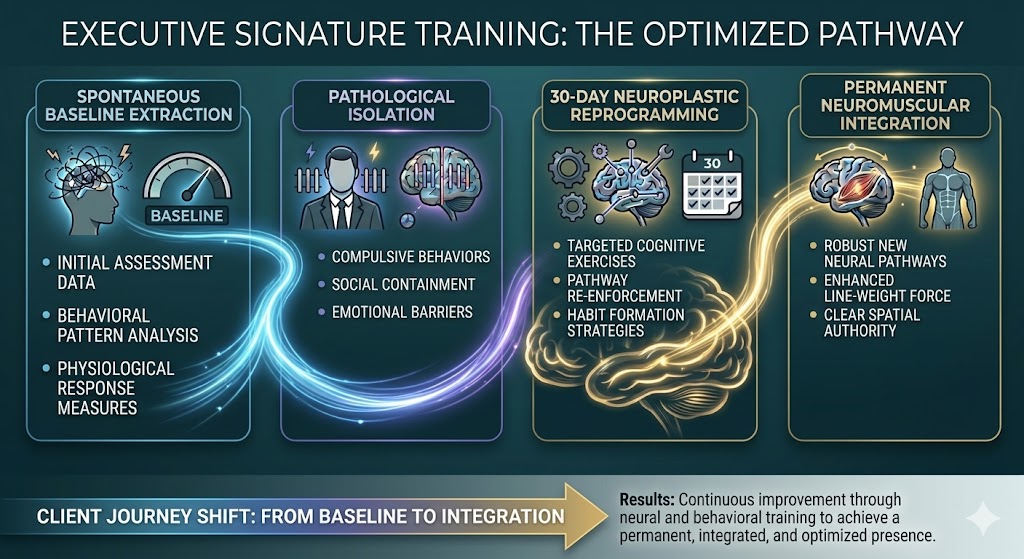
You cannot reinvent your public identity by aimlessly doodling a new autograph on a digital tablet. Neuroplasticity requires clinical precision, analog repetition, and deliberate friction. Here is the exact, step-by-step framework we use to engineer your transformation.
Step 1:
The Spontaneous Baseline Extraction
You cannot optimize what you have not accurately measured.
- Pro-Tip: Provide a full-page, spontaneous handwriting sample on completely blank, unlined paper using a standard ballpoint pen. Sign the bottom of the page exactly as you would a legal contract. This gives our experts the unedited, raw data of both your private reality and your current public mask.
Step 2:
Pathological Isolation
Our certified experts dissect the biometric data to isolate the exact strokes that are acting as psychological anchors.
- Pro-Tip: We map your size differential, baseline trajectory, and terminal strokes. We identify your specific defense mechanisms and self-limiting beliefs. We never attempt to change more than two or three traits at once, as overloading the central nervous system causes severe cognitive rejection.
Step 3:
Neuroplastic Reprogramming (Graphotherapy)
We design your optimized signature and prescribe a highly customized, 30-day writing protocol.
- Pro-Tip: You must practice the newly engineered signature for 15 minutes a day, using a ballpoint pen on unlined paper, entirely uninterrupted. The mental friction and physical discomfort you feel during the first 72 hours is the literal sensation of old, self-limiting neural pathways dying. Do not stop.
Step 4:
Neuromuscular Integration
By day 30, the new signature will begin to feel completely natural, and it will flow effortlessly from your pen.
- Pro-Tip: As the new stroke becomes autonomic muscle memory, you will notice profound shifts in your daily reactions. Your posture will straighten, your imposter syndrome will evaporate, and you will project effortless, authentic authority. The psychological upgrade is now permanently locked into your central nervous system.
Semantic Entities and Advanced Signature Dynamics
To truly master the nuances of your executive autograph, you must understand how modern corporate environments and technological shifts impact the integrity of your biometric data.
Digital Signatures vs. Analog Integrity
In an era dominated by DocuSign and digital styluses, many executives wonder if their physical signature still matters. The answer is an unequivocal yes.
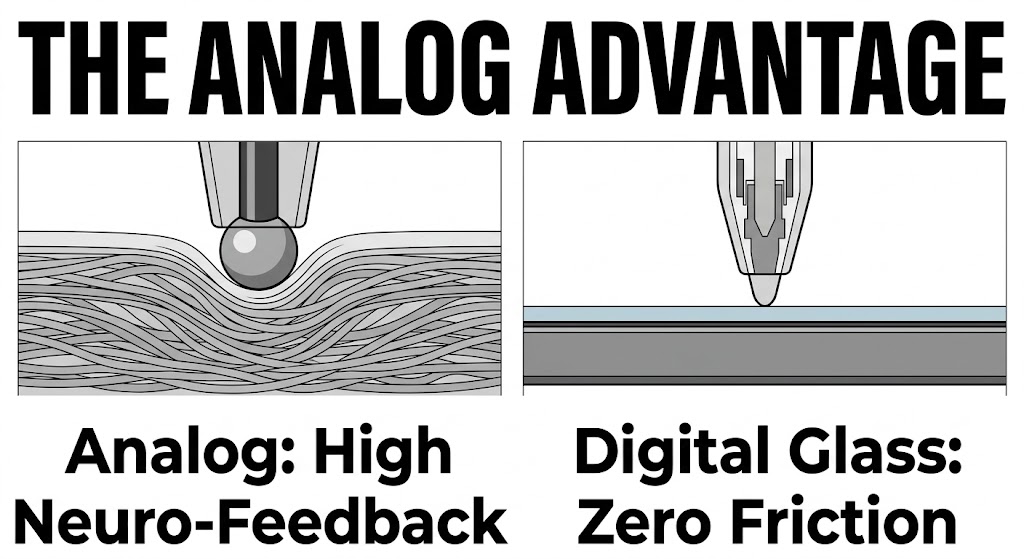
While typing on a keyboard is a uniform, mechanical action that strips away all biometric emotional data, dragging a stylus across a glass screen is only marginally better. A glass screen offers zero kinetic friction.
True neuroplastic shifts and accurate biometric audits require the complex, varied friction and pressure dynamics that only a physical pen on analog paper can provide. You must optimize the signature on paper first. Once the neuromuscular habit is locked into your brain, the psychological authority transfers seamlessly when you execute the signature digitally.
Cultural and Corporate Norms in Autographs
A clinical optimization takes your specific industry into account. A highly legible, perfectly spaced, and slightly rigid signature suggests you excel in transparent, structured environments. This is the optimal design for professionals in finance, corporate law, or healthcare administration.
Conversely, a massive, sweeping, highly stylized signature indicates a fast-paced, abstract thinker. This design is highly effective for forward-facing roles like creative directors, sales VPs, or disruptive startup founders. Your signature must align with the specific authority required by your sector.
Why Elite Professionals Choose www.thegraphology.com?
The internet is flooded with five-dollar automated apps that claim to generate “cool” signatures based on your name. Relying on a random algorithm to design the biometric anchor of your professional brand is corporate malpractice.
An algorithm only measures geometry; it cannot measure psychological friction. It cannot synthesize the profound contradiction of a leader trying to project dominance while secretly battling crippling burnout.
At www.thegraphology.com, we operate at the bleeding edge of biometric psychological assessment. We mandate absolute human oversight. Every single signature audit and optimization protocol is manually measured, contextualized, and engineered by certified clinical experts.
We map the exact friction between who you are and who you pretend to be, and we hand you the definitive, neuroplastic tools to permanently rewrite your root code.
You spend thousands of hours and dollars curating your public image. It is time to ensure your ink isn’t secretly betraying you to anyone who knows how to read it. Stop faking your executive presence. Let us engineer your reality.
Frequently Asked Questions
Does changing my signature through optimization actually change my personality?
Yes, through the scientifically proven principle of neuroplasticity. Your brain dictates the micro-movements of your hand, but the neuro-biological feedback loop is bi-directional.
By consciously forcing your hand to practice a balanced, authoritative signature for 21 to 30 days, you feed new kinetic data back to your central nervous system. This physically rewires your emotional baseline, eradicating imposter syndrome and permanently elevating your confidence to match the new strokes.
Why do so many successful doctors and CEOs have terrible, illegible signatures?
It is a combination of severe cognitive fatigue, muscle degradation from high-volume signing, and a profound subconscious defense mechanism. Psychologically, complete illegibility serves as a protective shield.
The more unreadable the signature, the less the writer wants to be personally scrutinized or held accountable for the specific, granular details of the documents they are signing. It is an evasion tactic.
Is it unprofessional to sign corporate documents with only my initials?
Yes, using only initials in a professional setting is highly discouraged. Initials strip away your personal identity and create an immediate psychological barrier.
Graphologically, signing exclusively with initials indicates a subconscious desire to remain anonymous, evade emotional connection, and withhold your true self from the public. While it may project cold efficiency, it actively destroys authentic, high-level trust.
What does it mean if my signature ends with a single period or dot?
A single, firm dot placed intentionally at the end of an autograph signifies absolute, unyielding finality. The writer is subconsciously declaring, “I have spoken, and the conversation is over.”
It reveals a highly decisive, authoritative, and occasionally stubborn executive who does not tolerate dissent or endless debate once they have made a final strategic decision.
How quickly will I see results from the daily signature rewiring exercises?
The protocol requires absolute consistency. You must dedicate 15 minutes of unbroken focus every single day. Typically, you will feel significant psychological resistance (mental friction or hand cramping) during the first week as old neural pathways fight the structural change.
However, by day 14 to 21, clients report profound shifts in their physical posture, vocal authority, and internal calmness as the optimized stroke becomes autonomic muscle memory.
Should I include my middle name or initial in my optimized professional signature?
Including a middle initial adds a deliberate layer of formality and indicates a strong reliance on logic, tradition, and intellectual process over raw emotion. It creates a necessary psychological buffer between you and the reader.
If my signature leans to the left, is that hurting my professional brand?
A leftward slant is the ultimate psychological defense mechanism. The writer is subconsciously pulling away from the future (the right side of the page) and retreating into the safety of the past (the left side).
This indicates a leader who is deeply guarded, fears vulnerability, and is highly risk-averse. In a corporate setting, this projects a lack of forward-thinking momentum and a reluctance to embrace disruptive innovation.
Can an optimized signature prevent my documents from being forged?
Absolutely. It actually increases your security exponentially. A chaotic, messy scribble is surprisingly easy for a fraudster to mimic because it lacks a consistent, measurable rhythm.
A clinically optimized signature contains deliberate, rhythmic variations in pen pressure, anchor letters, and spatial baseline trajectory. These specific neuro-motor dynamics are nearly impossible for a forger to replicate without possessing your exact central nervous system.
Can my digital signature on an iPad or tablet be analyzed clinically?
While an expert can observe basic spatial geometry from a digital signature, a stylus on a glass screen provides zero kinetic friction. It completely strips away pen pressure—the vital biometric metric that reveals your emotional depth, vitality, and stress tolerance.
For a true, highly accurate clinical audit of your executive identity, you must provide a wet-ink sample executed with a standard ballpoint pen on unlined paper.
What does it signal if my signature is written entirely in block capital letters?
Capital letters act as structural walls in clinical graphology. A signature written entirely in block capitals reveals an executive who is fiercely guarding their true emotions.
They demand to be dealt with strictly on a logical, superficial level and refuse to expose any internal vulnerabilities. While it projects a fortress of competence, it can severely inhibit authentic, trust-based relationships with a board or leadership team.
Is it a good strategy to make my signature slant sharply upward?
An ascending baseline (slanting upward at a 5-to-10 degree angle) is the hallmark of relentless optimism, ambition, and a forward-thinking executive mindset.
However, if the angle is excessively steep (approaching 45 degrees), it flags unsustainable, manic energy. This indicates a leader who is severely disconnected from operational reality and prone to sudden, catastrophic executive burnout.
Is it appropriate for a founder or CEO to sign with only their first name?
Signing exclusively with a first name strips away the formalities of a corporate identity and family legacy. It indicates fierce independence, a craving for direct, intimate communication, and a desire to be recognized strictly for individual merit rather than a title.
It is highly effective for creative disruptors and visionary founders, but strongly discouraged in traditional sectors like corporate banking or enterprise law.
Is it psychologically damaging to use two completely different signatures for different tasks?
Not at all, provided the contexts are distinctly separated. Many elite professionals maintain a highly structured, fully legible signature for binding legal documents (projecting transparency and accountability), and a faster, stylized initial-based signature for internal memos (projecting efficiency).
This dual approach simply indicates high cognitive adaptability and the ability to seamlessly compartmentalize different public roles.
What does it mean if I draw a line above my signature instead of below it?
An underline acts as a pedestal of confidence, but an overline acts as a psychological ceiling. A line drawn directly above the signature reveals a leader who feels constantly oppressed by external circumstances, demanding boards, or relentless market pressures.
Why does my signature look aggressive, even when I try to write it smoothly?
You are likely executing the “Shark’s Tooth” formation. If your middle-zone letters (like ‘m’ or ‘n’) resemble sharp, jagged spikes rather than soft, flowing curves, your central nervous system is projecting aggression and hyper-vigilance.
Subconsciously, stakeholders reading this ink will sense hostility and a lack of empathy, instinctively putting their guard up and creating unnecessary friction in your business negotiations.
Does the speed at which I sign my name affect how people perceive my leadership?
Yes, writing speed is a direct biometric reflection of your cognitive processing velocity. A rapid, fluid signature indicates a fast-paced, impatient thinker who grasps concepts instantly and demands rapid execution from their team.
A slow, highly deliberate signature reveals a methodical, cautious perfectionist who requires extensive data before making a strategic decision. Optimizing your signature ensures your kinetic pacing aligns precisely with the demands of your specific industry.