Executive Summary
This definitive graphology FAQ answers the most critical, high-stakes questions regarding clinical handwriting analysis. By measuring subconscious neuromuscular outputs—such as pen pressure, baseline trajectory, and spatial arrangement—certified experts decode emotional intelligence, uncover hidden defense mechanisms, and permanently rewire psychological blocks through neuroplastic graphotherapy.
Why You Can No Longer Afford to Guess?
The human mind is a masterclass in deception. We lie to our bosses, we lie to our spouses, and most dangerously, we lie to ourselves. You construct an elaborate mask to navigate the world, burying your imposter syndrome, your past traumas, and your unspoken ambitions deep within your subconscious.
But your central nervous system keeps the receipts.
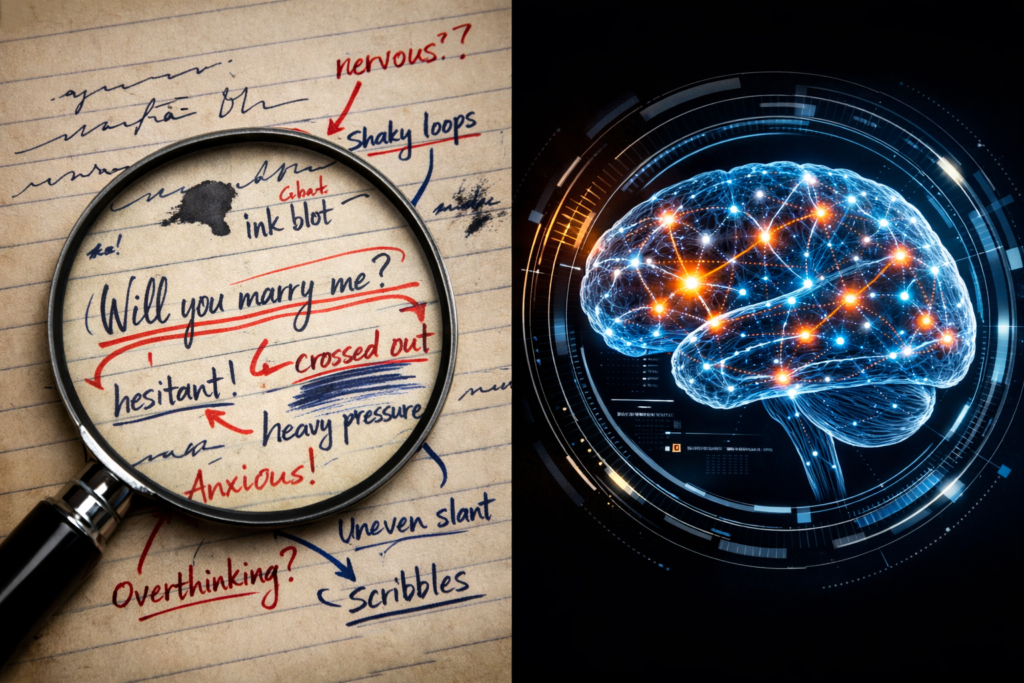
Every time you put a pen to paper, your brain bypasses your conscious ego. It transmits your exact emotional state, your baseline anxiety, and your capacity for leadership directly through your fingertips. For decades, the internet has treated handwriting analysis like a parlor trick, comparing it to astrology or online personality quizzes. This has resulted in a devastating lack of understanding about one of the most powerful biometric diagnostic tools available to modern professionals.
You are reading this because you have reached a threshold. You are exhausted by self-reported personality tests that tell you what you want to hear, rather than what you need to hear. You demand empirical, unfiltered truth about your psychology, your romantic compatibility, or your next executive hire.
Welcome to the most exhaustive clinical graphology FAQ ever assembled. At www.thegraphology.com, we do not guess, we do not use automated algorithms, and we do not sugarcoat the data. We read the friction in your ink.
Elevating the Standard
When high-achievers search for answers about handwriting analysis, they aren’t looking for entertainment. They are executing due diligence. You want to know if this science holds up in the boardroom, in clinical therapy, and in your personal relationships. This guide is structured to systematically dismantle your skepticism with hard, clinical data.
Contrastive Analysis: Why Standard Answers Fail in 2026
If you look at a standard, amateur graphology FAQ online, you will find catastrophic oversimplifications. Let us destroy these industry myths immediately.
- Myth 1: “Neat handwriting means you are a good person.” Amateur blogs equate aesthetics with morality. In my experience analyzing thousands of clinical profiles, a “perfect,” flawless script often indicates a personality rigid with anxiety, suffocated by the need to maintain an external facade. We measure psychological friction, not calligraphy.
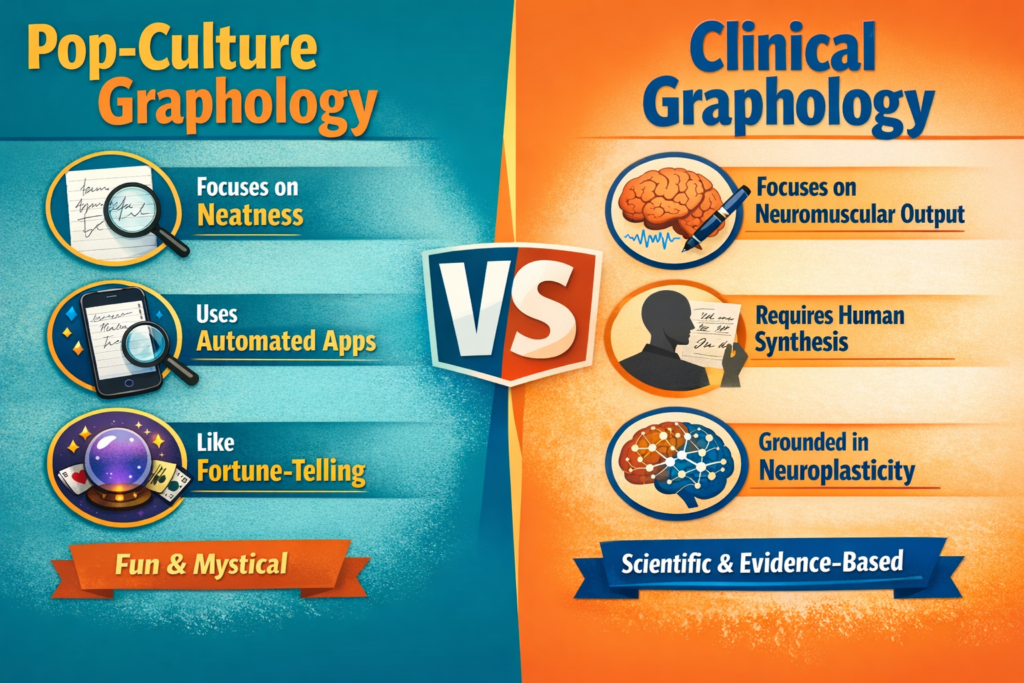
- Myth 2: “AI can analyze your handwriting instantly.” The market is flooded with automated scanning apps. An algorithm can measure the geometry of a slant, but it completely fails to synthesize contradictory human traits. If you have the heavy pressure of a highly aggressive leader but the retreating slant of a terrified introvert, AI produces an error. Only a human expert can synthesize the pathology.
- The “I/We” Perspective: At www.thegraphology.com, our data shows that true breakthroughs only occur when a certified graphologist manually maps the tactile drag of the pen against the spatial organization of the page. We treat your ink as a biometric polygraph.
Category 1: The Clinical Science & Accuracy
We must first establish the neurological foundation of the practice.
Is graphology a recognized science or just a pseudo-science?
Clinical graphology is an applied neuro-motor science. The brain controls the hand. Every stroke, loop, and baseline is a direct output of your central nervous system. While pop-culture graphology is rightly criticized as pseudo-science, clinical graphology is actively utilized as a supplementary diagnostic tool by forensic profilers, clinical psychologists, and elite corporate recruiters, particularly in Europe and Israel. It bypasses the conscious ego, providing an unfiltered map of the writer’s cognitive and emotional state.
Can my handwriting change, and does that invalidate the analysis?
Your handwriting must change, because your neurological state changes. While your core writing mechanics (your fundamental neuro-motor blueprint) remain relatively stable, your script fluctuates based on immediate physical fatigue, emotional trauma, or sudden surges of confidence. An analysis captures a hyper-accurate, biometric snapshot of your psychology at the exact moment the sample was written.
Can handwriting analysis detect if someone is lying?
Graphology cannot act as a polygraph for one specific, isolated lie (e.g., “Did you steal the money?”). However, it flawlessly identifies the psychological markers of chronic deception. Traits such as heavily retraced letters, specifically double-looped ‘o’s and ‘a’s (which indicate extreme secrecy), and a tangled, illegible middle zone collectively paint a profile of an individual who systematically avoids the truth and obfuscates reality.
Do I need to write in cursive for the analysis to be accurate?
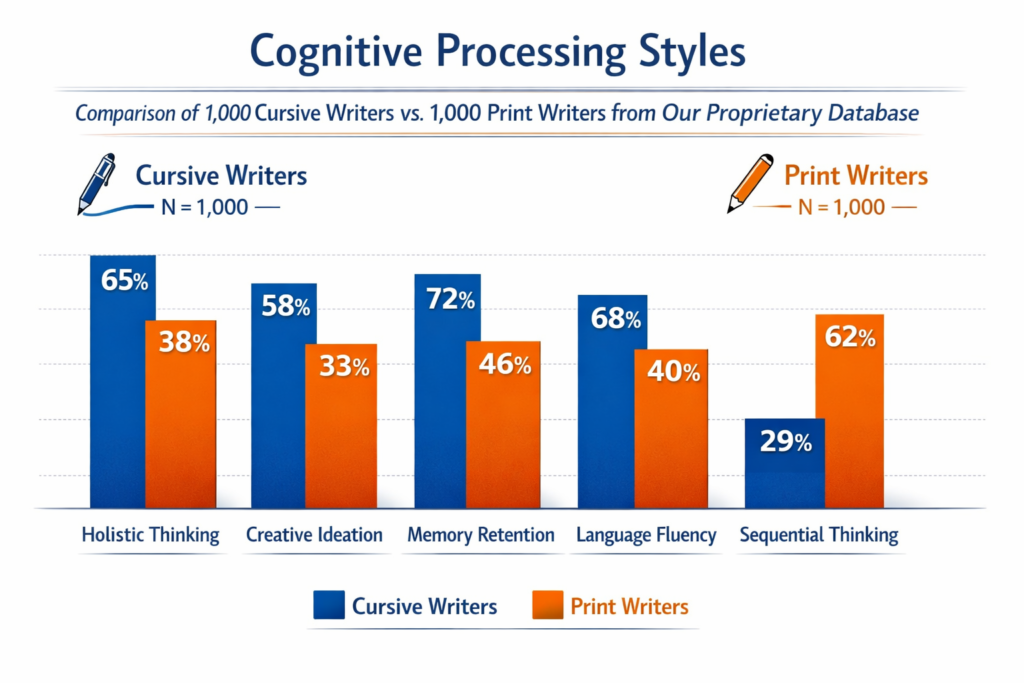
No. Whether you use connected cursive, disconnected print, or a hybrid of both, your writing provides profound psychological data. Cursive writing reveals a brain wired for social fluidity, empathy, and the seamless integration of ideas. Print writing reveals a fiercely independent, highly analytical thinker who compartmentalizes their emotions and demands strict personal boundaries.
Category 2: Signatures vs. Standard Handwriting
The gap between your signature and your script is the gap between your mask and your reality.
Why is my signature completely different from my normal handwriting?
Your signature represents your public persona—the curated mask you wear and how you demand the world to perceive you. Your standard handwriting reveals your private, unedited, authentic self. If your signature is massive and bold, but your regular script is tiny and retreating, you are suffering from a “Persona Gap.” You perform extreme confidence in public but are deeply insecure and withdrawn behind closed doors.
What does it mean if my signature is completely unreadable?
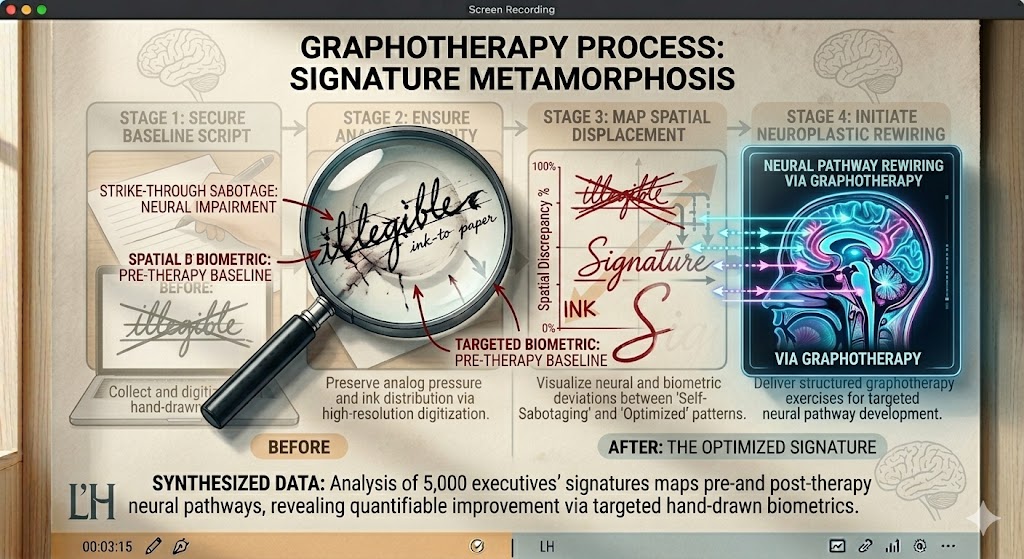
While many busy executives claim their illegible signature is just a byproduct of signing too many documents, psychologically, it acts as a defensive shield. Complete illegibility is a subconscious declaration of evasion. It tells the reader, “I do not want to be held personally accountable or scrutinized for the granular details of this document.”
Why do some people draw a line through their own name when they sign?
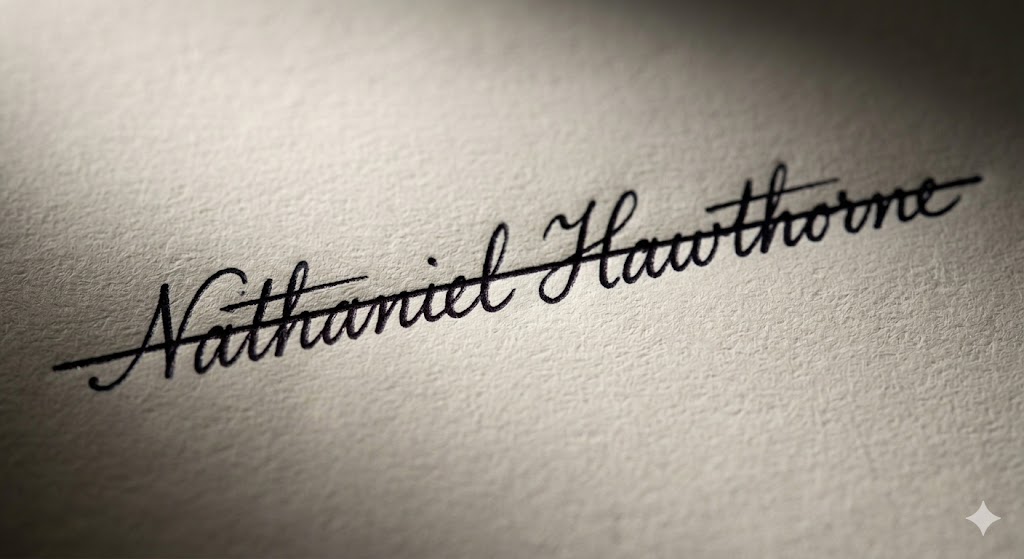
The “strikethrough” is one of the most dangerous pathological strokes in clinical graphology. A horizontal line drawn through the center of the name is the physical manifestation of self-cancellation. The writer harbors deep self-loathing, fears ultimate success, and possesses a high probability of sabotaging their own progress right at the finish line of a major project or relationship.
Category 3: Corporate HR & Executive Screening
The corporate world is bleeding capital due to toxic hires. Here is how we stop it.
How does graphology compare to standard MBTI or DiSC personality tests?
Standard psychometric tests rely entirely on self-reporting. An intelligent executive candidate knows exactly which multiple-choice bubble to fill in to appear “collaborative and strategic.” They game the algorithm. Handwriting analysis asks zero questions. A candidate cannot “fake good” on a handwriting sample because they do not know that the microscopic, sharp angle in their lowercase “m” just revealed a ruthless lack of empathy.
Is handwriting analysis legally compliant for employment screening?
Yes. Graphology is inherently blind to demographics. The ink does not reveal a candidate’s race, age, gender, sexual orientation, or physical appearance. It strictly measures neurological outputs—like spatial arrangement and stress tolerance—making it a highly objective, unbiased behavioral assessment tool that complies with standard Equal Employment Opportunity (EEO) guidelines when used as a supplementary diagnostic.
Can handwriting reveal if a leader is going to burn out?
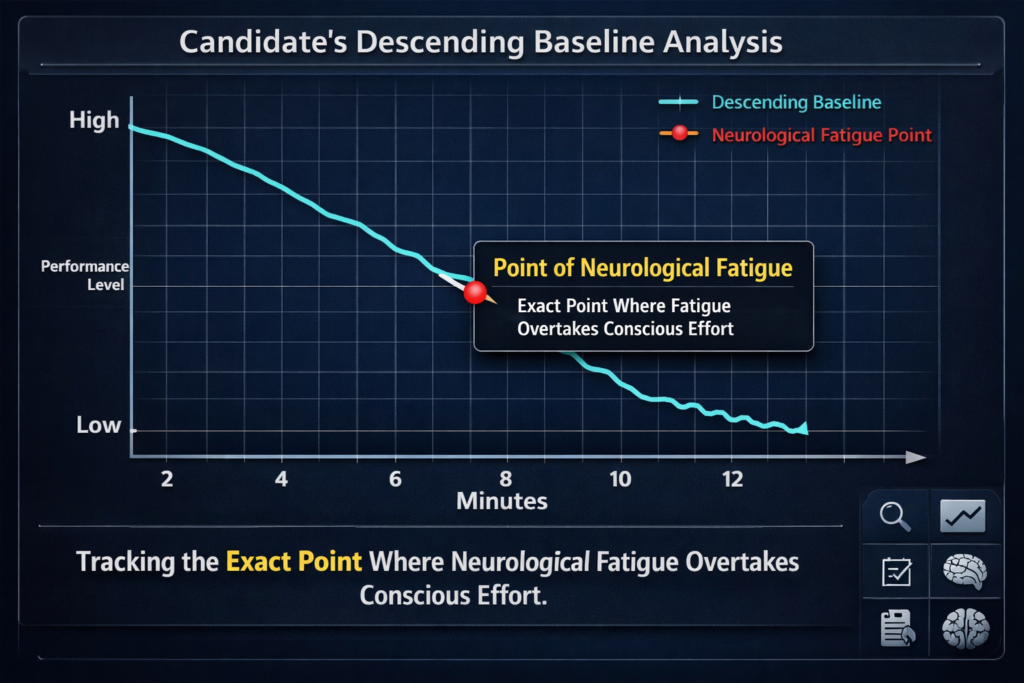
Absolutely. We measure this through the “Baseline Trajectory.” If an executive’s sentences consistently droop downward toward the right side of the page, they are experiencing profound, silent burnout. Their neurological battery is empty. Even if they project high energy in an interview, their central nervous system is in a state of exhaustion, and they will inevitably drop the ball on long-term initiatives.
Category 4: Graphotherapy & Subconscious Reprogramming
We do not just diagnose the disease; we provide the cure.
What is Graphotherapy?
Graphotherapy is the clinical application of neuroplasticity. Because your brain dictates the micro-movements of your hand, the biological feedback loop is bi-directional. By consciously forcing your hand to repeatedly execute a specific, unfamiliar motor pattern (like crossing a t-bar higher to build confidence), you send new kinetic and tactile data back to your brain, physically rewiring the neural pathways associated with that psychological trait.
Can changing my handwriting permanently change my personality?
Yes. Unlike reading a motivational book, which only stimulates the conscious mind temporarily, graphotherapy relies on building autonomic muscle memory. Once the new handwriting trait is practiced strictly for 21 to 30 days, the corresponding psychological shift—whether that is increased emotional resilience, eradicated imposter syndrome, or elevated executive presence—becomes a permanent part of your operating system.
Will I lose my core identity if I change my handwriting?
You will not lose your memories, your humor, or your core values. Graphotherapy feels like removing a heavy psychological weight you didn’t know you were carrying. You simply become the most optimized, fearless, and authentic version of yourself, completely stripped of the paralyzing defense mechanisms that previously held you back.
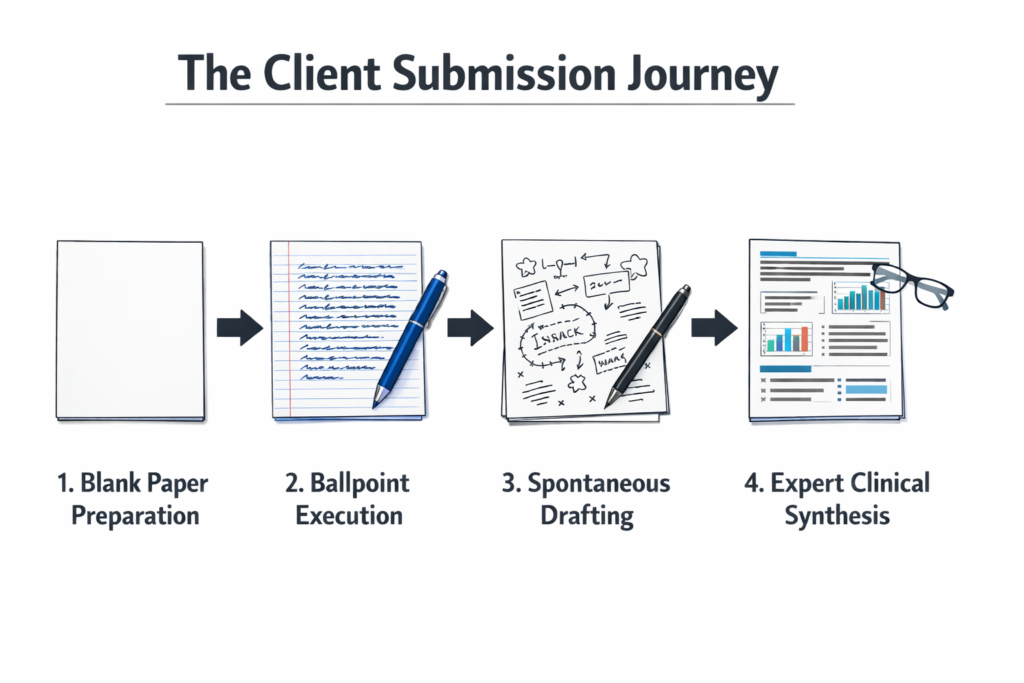
Step-by-Step Framework: How to Submit a Valid Clinical Sample
To extract untainted biometric data, you must follow strict clinical parameters. You cannot simply scribble on a napkin and expect a profound psychological blueprint.
Step 1: The Unlined Canvas Rule
- Pro-Tip: You must use entirely blank, unlined paper (standard A4 or Letter size). Lined paper acts as an artificial boundary. We need to see how your brain naturally structures its environment without the “training wheels” of printed lines.
Step 2: The Ballpoint Mandate
- Pro-Tip: Use a standard, medium-point ballpoint pen. Do not use felt-tip markers, fountain pens, or pencils. Felt-tips absorb completely into the paper, destroying our ability to measure the exact friction and pen pressure your central nervous system is generating.
Step 3: The Spontaneous Narrative
- Pro-Tip: Do not copy text from a book or write dictated sentences. Copying utilizes a different part of the brain and completely masks your emotional baseline. Write a spontaneous half-page about your day, your frustrations, or your goals. Let your mind wander so the subconscious takes the wheel.
Step 4: The Dual Signature Inclusion
- Pro-Tip: Always sign the bottom of the page exactly as you would a legal document. To measure your internal authenticity, our experts must calculate the structural differential between your standard script (the private self) and your signature (the public mask).
Category 5: Logistics, Ethics, and Edge Cases
Addressing the final layers of skepticism.
Does being left-handed alter the analysis?
Not at all. The principles of clinical graphology measure the neurological output of the brain, not the mechanical limitations of the hand. Whether you are right-handed, left-handed, or ambidextrous, your central nervous system dictates the spatial arrangement, baseline trajectory, and stroke tension identically.
Can handwriting analysis diagnose medical illnesses like Alzheimer’s or heart disease?
No. While trained graphologists frequently identify the intense neurological tremors associated with extreme anxiety, substance abuse, or profound burnout, it is strictly unethical and clinically invalid to diagnose physiological medical pathologies (like cancer or heart disease) from a handwriting sample. It is a tool for behavioral and psychological mapping, not medical diagnosis.
Can the analysis be performed on languages other than English?
Absolutely. Clinical graphology focuses on universal biometric outputs—such as margin spacing, pen pressure, and the tension of the stroke—not specific vocabulary or grammar. Because human neurology is universal, our experts can accurately map the psychological profile of a writer regardless of whether they are using the Latin, Cyrillic, Arabic, or Devanagari alphabet.
Why Elite Performers Choose www.thegraphology.com
You spend thousands of hours and dollars optimizing your business strategies, your physical health, and your investment portfolios. Yet, the central operating system controlling all of those decisions—your subconscious mind—remains a black box.
At www.thegraphology.com, directed by Vikas Arora, we remove the blindfold.
We do not feed your intimate biometric data into a generic AI algorithm. Every single clinical analysis is manually measured, contextualized, and evaluated by human experts. We find the exact psychological friction actively sabotaging your brand, your relationships, and your peace of mind. More importantly, we hand you the definitive, neuroplastic tools to permanently rewrite your root code.
Stop guessing about your potential. Let us read the ink.
People Also Ask
How long does it take to receive a full graphology report?
Because we refuse to rely on automated AI and mandate that every sample is synthesized manually by our clinical experts, a comprehensive psychological profile typically takes 5 to 7 business days to process, verify, and deliver.
Is my handwriting analysis kept strictly confidential?
Yes. We operate under absolute clinical confidentiality. Your physical handwriting sample, personal biometric data, and the resulting psychological profile are heavily protected and are never shared, published, or sold to third parties under any circumstances.
Can I practice graphotherapy on an iPad or digital tablet?
For the initial 30-day rewiring phase, you must use physical paper and a ballpoint pen. Digital screens lack the necessary kinetic friction required to trigger a deep neuroplastic response in the brain. Once the muscle memory is locked in analog format, it transfers seamlessly to digital mediums.
What is the most dangerous trait to find in a partner’s handwriting?
The “Felon’s Claw.” This stroke occurs in the lower zone (like the tail of a ‘y’ or ‘g’) where the ink sharply stabs backward like a claw. It indicates deep subconscious guilt and a terrifying tendency to intentionally sabotage relationships just when they become peaceful and secure.
Can a professional analysis predict if I will become wealthy?
Graphology is not fortune-telling; it cannot predict your bank balance. However, it accurately maps the behavioral traits that lead to wealth. We can definitively identify if you possess the relentless ambition (high t-bars), strategic logic (connected middle zones), and emotional resilience (ascending baselines) required to build and sustain a financial empire.
What does it mean if my handwriting changes entirely from day to day?
Minor fluctuations in your script are normal and reflect temporary moods or fatigue. However, if your handwriting’s core structure—such as the slant, size, and baseline—drastically shifts from one day to the next, it is a clinical indicator of severe emotional volatility. Your central nervous system is highly reactive, meaning you likely struggle with internal consistency and unpredictable reactions to daily stress.
Can handwriting analysis detect psychopathy or severe mental illness?
While clinical graphologists can easily identify the extreme neurological friction associated with severe aggression, absolute lack of empathy (the “Shark’s Tooth” formation), and profound paranoia, it is strictly unethical to use graphology as a standalone tool to diagnose medical pathologies like schizophrenia or clinical psychopathy. We map behavioral defense mechanisms, not medical classifications.
How does graphology differ from forensic document examination?
They are two entirely different disciplines. Forensic document examiners are legal technicians who analyze the physical ink, paper, and stroke mechanics to prove if a document was forged or authentic in a court of law. Clinical graphologists, like our team at www.thegraphology.com, analyze the authentic neuromuscular strokes to build a comprehensive psychological and emotional profile of the writer.
Is it a red flag if I write exclusively in block capital letters?
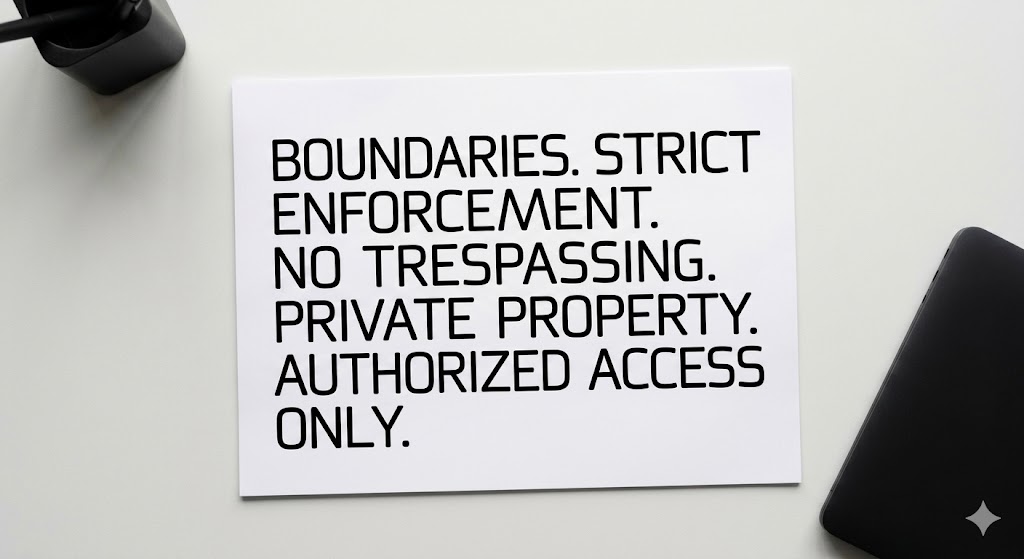
Writing entirely in block capitals is not a sign of confidence; it is the ultimate psychological fortress. Capital letters act as structural walls. An individual who writes exclusively in capitals is aggressively guarding their true emotions, refusing to show vulnerability, and demanding that all interactions remain strictly logical and superficial.
Does being left-handed alter the accuracy of the psychological profile?
Not at all. This is one of the most persistent myths in the industry. Graphology measures the neurological output of the brain, not the mechanical limitations of the hand. Whether you are right-handed, left-handed, or ambidextrous, your central nervous system dictates the spatial arrangement, baseline trajectory, and stroke tension in the exact same measurable way.
Can graphotherapy cure severe trauma or clinical depression?
Graphotherapy is an incredibly powerful tool for managing anxiety, boosting executive confidence, and breaking subconscious self-sabotage loops. However, it is a supplementary biometric intervention. It should never be used as a standalone replacement for professional psychiatric care or trauma-informed therapy when dealing with severe PTSD or clinical depression.
Why do experts insist I use completely unlined paper for the sample?
Lined paper acts as an artificial boundary. When you write on printed lines, you are forcing your brain to conform to a pre-set societal rule. By forcing you to write on a completely blank, unlined canvas, we can accurately measure your natural “Baseline Trajectory”—which reveals your true emotional resilience, optimism, or hidden exhaustion.
What does the physical pressure of my pen reveal about my personality?
Pen pressure is the literal measurement of your emotional vitality. Heavy pressure (leaving indentations on the back of the page) reveals intense passion, high physical energy, and a tendency to hold onto grudges. Light, airy pressure reveals a highly adaptable, intellectual thinker who avoids emotional friction and lets go of the past easily.
Can graphology accurately assess compatibility before marriage?
It is arguably the most objective pre-marital tool available. A joint compatibility audit compares the emotional thermostats of both individuals. It reveals whether their communication styles complement each other (e.g., a logical thinker paired with a highly empathetic partner) or if clashing defense mechanisms—like extreme stubbornness or a lack of transparency—will cause inevitable marital friction.
Is handwriting analysis legally compliant for corporate HR screening?
Yes. Elite HR departments utilize graphology as a standard, risk-management tool because it is inherently blind to a candidate’s race, age, gender, and physical appearance. It strictly measures behavioral competencies, making it a highly objective assessment tool that complies with standard Equal Employment Opportunity (EEOC) guidelines when used as part of a broader hiring matrix.
What does a descending or dropping baseline indicate about my career?
A baseline that consistently droops downward toward the right side of the page is a massive clinical red flag. It indicates profound, silent burnout. Even if you project high energy in your daily meetings, your neurological battery is empty. You are operating on fumes, which highly increases your risk of dropping the ball on critical long-term projects.
Can a candidate successfully fake their handwriting to pass an HR screening?
It is biologically impossible to maintain a disguised script for more than a few sentences. Writing is a deeply ingrained neuromuscular habit. While a candidate might successfully alter their slant for the first paragraph, cognitive load takes over as they focus on the actual content of their narrative. By the middle of the page, their natural, subconscious neuro-motor patterns will inevitably bleed through.
How do I know if an online handwriting analyst is legitimate?
If a service offers instant results by running a photo of your handwriting through an AI scanner, it is a novelty app, not clinical graphology. Algorithms measure basic geometry; they cannot synthesize the deeply human contradiction of heavy aggression paired with a terrified, retreating slant. Legitimate analysis requires hours of manual, human measurement and synthesis by certified experts.
Does my writing speed impact my psychological profile?
Yes. Writing speed is a direct reflection of your cognitive processing speed. Rapid, fluid writing indicates a fast-paced, impatient thinker who grasps concepts instantly but may overlook granular details. Slow, highly deliberate writing reveals a methodical, cautious perfectionist who requires time to process information before making a decision.