

Have you ever flipped a handwritten letter over, run your fingertips across the back of the page, and felt the words embossed into the paper like braille? You are not just feeling dried ink; you are feeling the physical residue of intense neurological and emotional energy.
In the world of graphology, the amount of force a writer applies to the paper is one of the most reliable barometers of their internal state. It cannot be easily faked.
While anyone can consciously decide to write larger or change the slant of their letters, pen pressure is an unconscious neuromuscular reflex. It is dictated by the limbic system—the emotional center of the human brain.
Whether you are analyzing your own journal entries, reviewing a business partner’s signature, or trying to understand a loved one better, understanding the heavy handwriting pressure meaning unlocks a profound layer of human psychology.
In this comprehensive guide, we will bypass the surface-level myths and dive deep into the specific psychological traits, hidden tensions, and powerful drives of the heavy-handed writer.
How to Accurately Measure Pen Pressure ?
Before we can dissect the psychological meanings, we must establish a clinical baseline for what actually constitutes “heavy” pressure. Relying strictly on the visual darkness of the ink is a rookie mistake. A dark, broad stroke might just be the result of a thick marker or a free-flowing fountain pen.
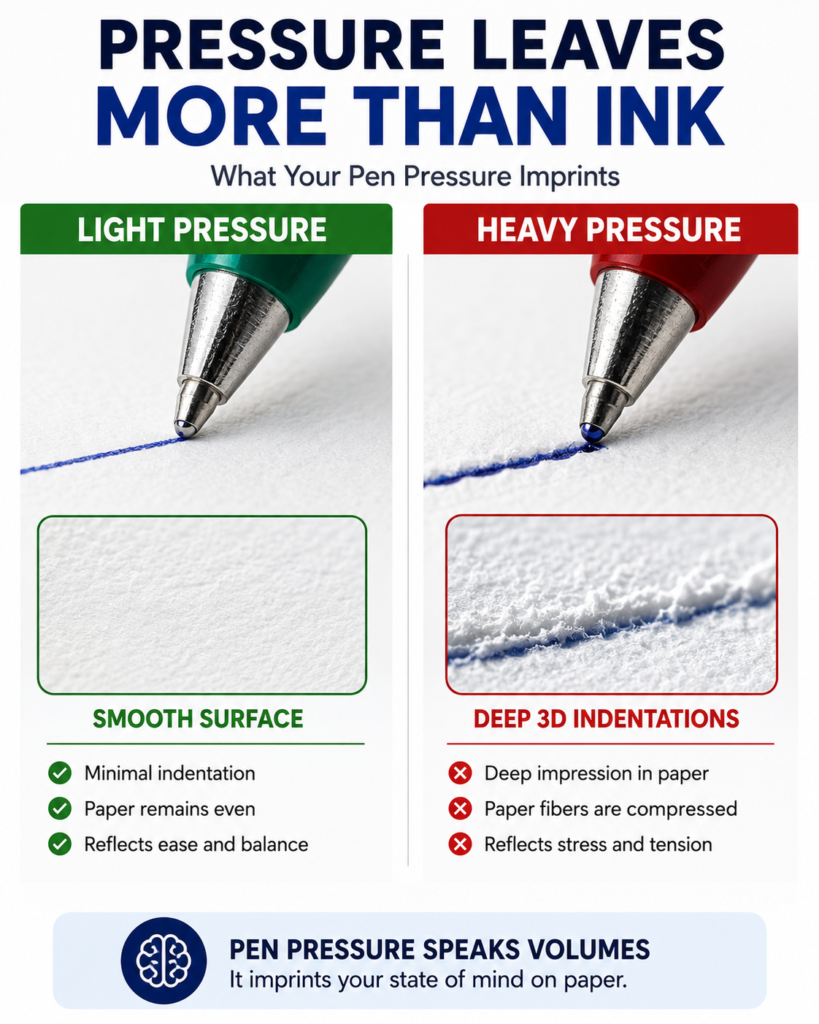
True graphological pressure is about the indentation on the page.
The “Blindfold Test” for Pen Pressure
To accurately gauge pressure, you must engage your sense of touch, not just your sight.
- Step 1: Turn the handwritten document completely over.
- Step 2: Close your eyes to remove visual bias.
- Step 3: Gently glide the pads of your index and middle fingers across the blank side of the paper, directly behind where the writing sits.
The Diagnosis:
- If the paper feels perfectly smooth, the writer uses light pressure.
- If you feel a slight, inconsistent texture, the writer uses average/moderate pressure.
- If you can distinctly feel the sharp ridges, bumps, and outlines of the letters protruding from the back of the page, the writer uses heavy pressure.
Now that you know how to identify it, let’s explore exactly what that heavy pressure reveals about the mind holding the pen.
The Psychology of the Pen:
Heavy Handwriting Pressure Meaning Explained
Graphology operates on a core principle of physics and psychology: Energy cannot be destroyed; it can only be transferred. When someone presses forcefully into a page, they are transferring massive amounts of internal psychological friction into the physical world. Here are the seven core traits this reveals.
1. Intense Emotional Depth (The “Sponge” Effect)
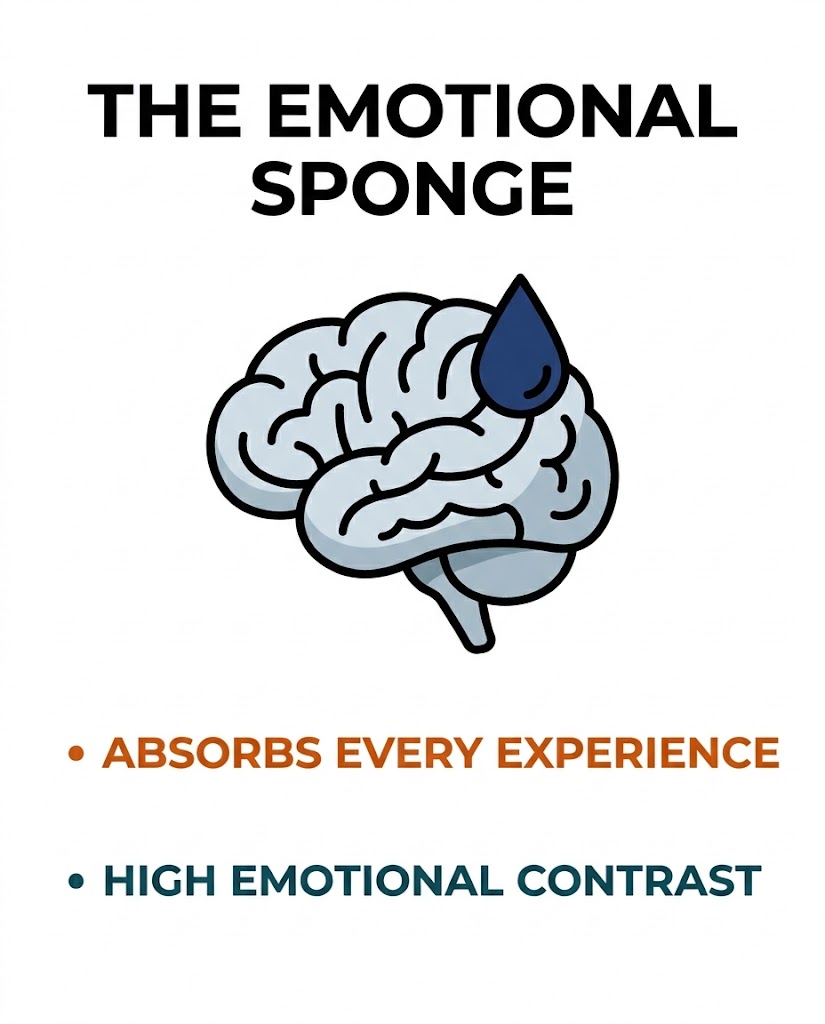
The most universal trait of heavy handwriting is profound emotional depth. People with light pressure tend to let experiences wash over them; they feel an emotion and then let it go. People with heavy pressure absorb emotions like a sponge.
- The Reality: Every experience leaves a lasting mark on their psyche, much like their pen leaves a mark on the paper.
- The Impact: When they love, they love with terrifying intensity. When they are joyful, they are ecstatic. However, this also means that when they are hurt, the wound cuts incredibly deep. They do not experience “mild” feelings. Life is experienced in high definition and high emotional contrast.
2. High Vitality and Physical Energy Reserves
It takes a measurable amount of physical exertion to press a pen deeply into a stack of paper line after line, paragraph after paragraph. Therefore, heavy pressure is a direct indicator of raw physical vitality.
- The Reality: These are the “doers” of the world. They possess a massive reservoir of kinetic energy that demands to be spent.
- The Impact: In a professional setting, individuals with heavy pressure are often the ones who can work 14-hour days without burning out. They thrive in environments that require stamina. Conversely, if they are forced into a sedentary lifestyle with no physical or creative outlet, this unspent energy quickly morphs into intense anxiety or restlessness.
Unbreakable Willpower and Determination Imagine a person digging their heels into the dirt before a tug-of-war match. Heavy pen pressure is the graphological equivalent of digging your heels in.
- The Reality: These writers are profoundly determined. Once they set their sights on a goal, they will push through obstacles, push back against criticism, and relentlessly drive forward.
- The Impact: This is a fantastic trait for entrepreneurs, athletes, and leaders. However, it can also manifest as extreme stubbornness. If you are debating someone who writes with crushing pressure (especially if they also use the “Star-Trek ‘t'” crossbar we discussed in our Pillar Post), save your breath. They have already made up their mind, and they will not be easily swayed by your arguments.
4. Hidden Stress, Tension, and Repressed Anger
This is where the heavy handwriting pressure meaning takes a darker, more diagnostic turn. We must look at whether the pressure is even or spasmodic.
- Even Heavy Pressure: Indicates steady willpower and deep, controlled emotions.
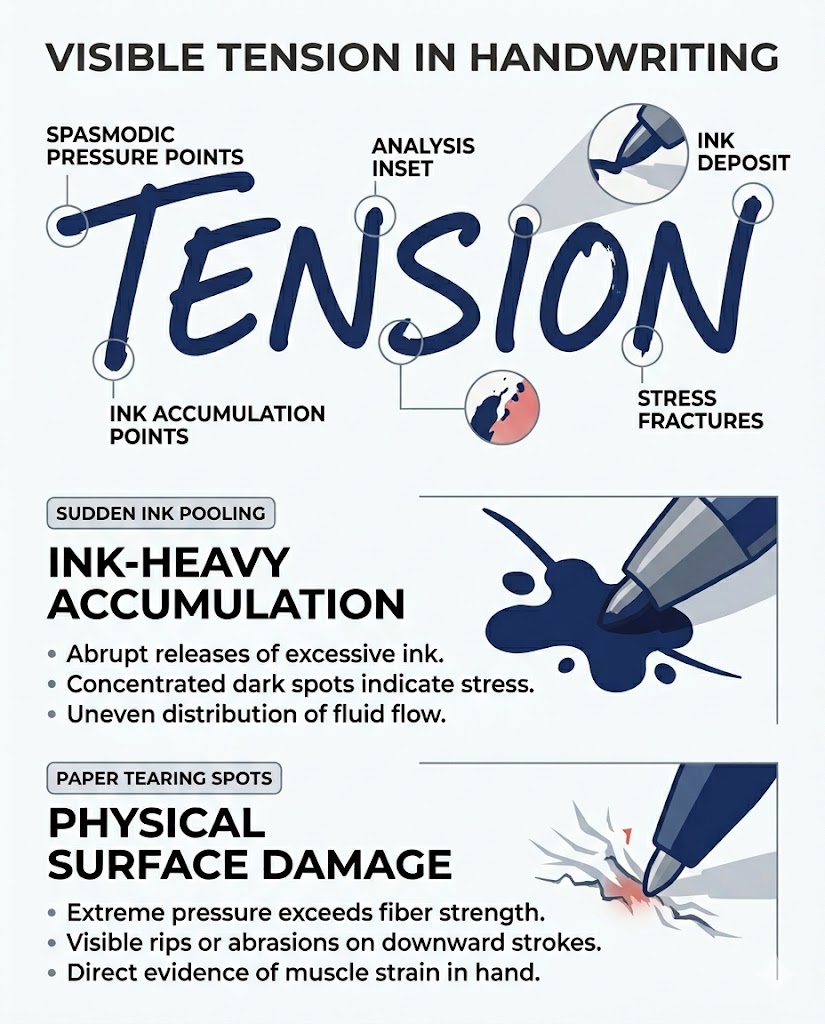
- Spasmodic Heavy Pressure: If the pressure suddenly spikes—where certain words or letters randomly tear into the paper while others are normal—you are looking at sudden bursts of repressed anger or acute neurological stress.
- The Impact: The writer is operating like a pressure cooker with a blocked valve. They are actively trying to control a chaotic internal environment.
In extreme cases, if the heavy pressure is paired with sharp, angular lower loops (like the ‘Felon’s Claw’ on a ‘y’ or ‘g’), it is a massive red flag for hidden aggression and potential volatility.
5. A Grounding in the Sensory and Material World
Graphology divides human focus into three zones: the intellectual, the social, and the physical. Heavy pressure inherently roots the writing in the physical realm.
- The Reality: Heavy writers are highly connected to their five senses. They appreciate things they can touch, taste, see, and hold.
- The Impact: They are often drawn to rich foods, heavy fabrics, intense physical intimacy, and tangible assets. They are practical rather than overly theoretical. If you want to persuade a heavy writer in business, do not give them abstract theories; give them hard data, physical prototypes, and concrete financial projections.
6. Deep Commitment and Unwavering Loyalty
Because heavy writers do not feel things lightly, they do not commit lightly.
- The Reality: When a person with deep handwriting pressure makes a promise, it takes root in their core. They take their obligations, friendships, and romantic partnerships incredibly seriously.
- The Impact: You can rely on them in a crisis. They are the anchor in the storm. However, they demand the exact same level of unwavering loyalty in return. If they sense that you are treating a relationship casually while they are deeply invested, they will feel profoundly disrespected.
7. Difficulty Forgiving and Letting Go of the Past
This is the shadow side of intense emotional memory. Just as the physical indentation remains on the paper long after the ink has dried, emotional slights remain deeply engraved in the heavy writer’s subconscious.
- The Reality: They do not “forgive and forget” easily. A betrayal is not just an event; it is a permanent alteration to their emotional landscape.
- The Impact: They are highly prone to holding grudges. Even years after an argument, a heavy writer can recall exactly how they felt in that moment. If you are in a relationship with a heavy writer, sweeping issues under the rug will never work. You must completely resolve the root of the conflict, or it will fester indefinitely.
Context Matters: Combining Pressure with Other Graphology Traits
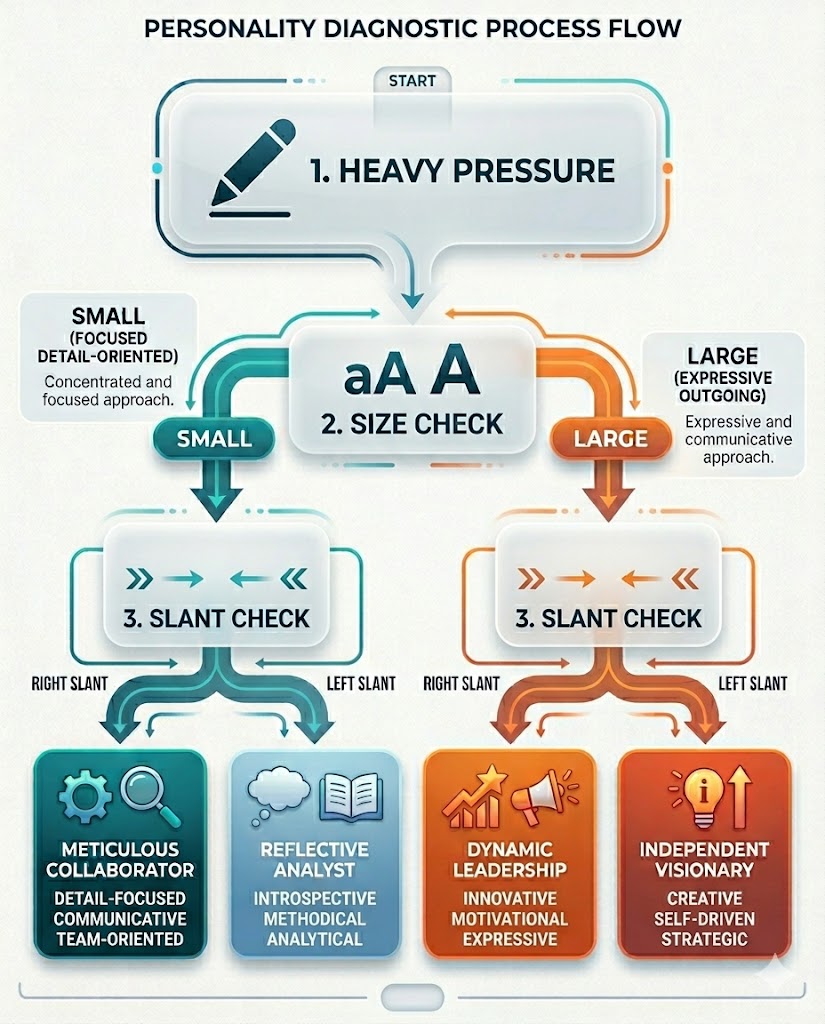
In professional graphology, no single trait is ever analyzed in a vacuum. To truly understand the heavy handwriting pressure meaning, you must look at how the pressure interacts with the size and slant of the writing.
Heavy Pressure + Extremely Small Size
This combination creates a highly potent, introverted energy. Small size dictates extreme concentration and a desire to remain behind the scenes, while heavy pressure dictates intense internal energy. This person is a master researcher, an obsessive specialist, or a deeply analytical thinker. They have massive feelings but refuse to share them with the outside world.
Heavy Pressure + Very Large Size
This is the classic signature of the commanding extrovert. Large writing demands attention, and heavy pressure demands compliance. This individual wants to dominate their environment. They are forceful, charismatic, and possess the physical energy to back up their massive ambitions.
Heavy Pressure + Extreme Right Slant
The right slant leans toward the future and toward other people, indicating emotional reactivity. Combined with heavy pressure, this person is incredibly passionate, highly impulsive, and driven entirely by their intense feelings. They wear their heavy heart on their sleeve.
Graphotherapy: Can You Relieve Stress by Lightening Your Pen?
As we explored in our foundational guides, graphotherapy is the science of reverse-engineering your psychology by consciously altering your physical handwriting strokes.
If you are a heavy writer who constantly feels overwhelmed by stress, bogged down by past grudges, or mentally exhausted from caring too much, your handwriting is actively reinforcing those neurological loops.
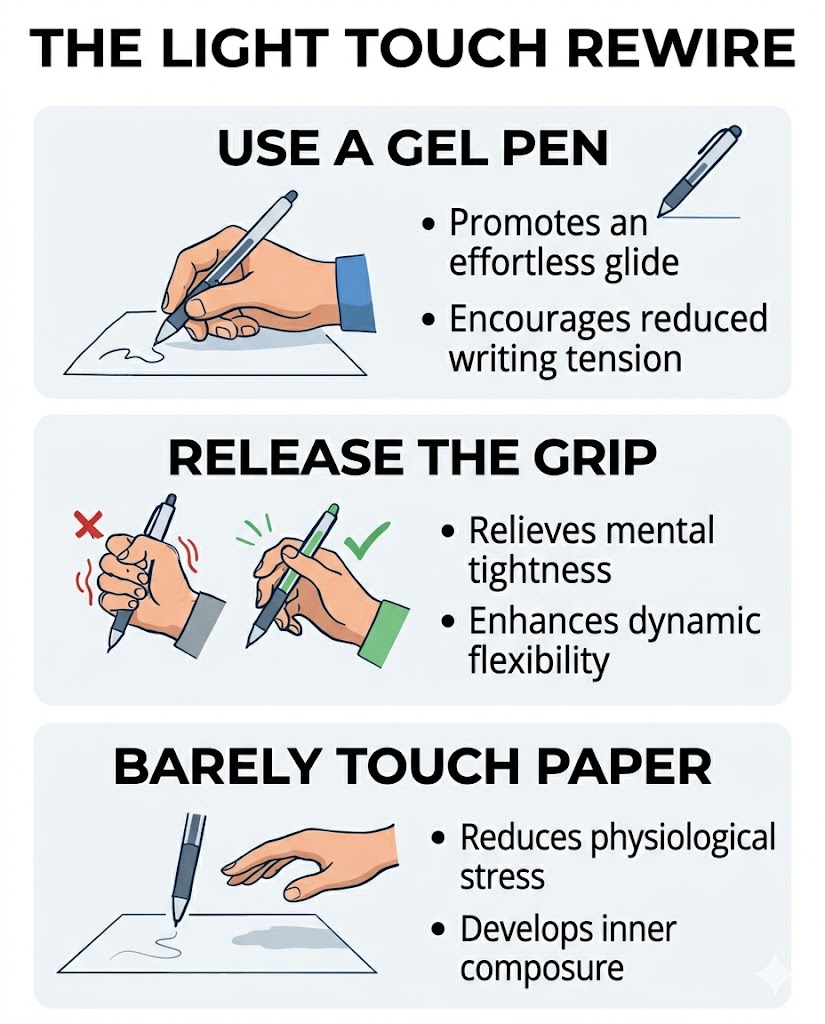
The Light-Touch Exercise: Try this for 14 days. Buy a very fine-tipped, smooth-flowing gel pen (which requires zero physical force to release ink). Spend 10 minutes every evening journaling about your day with a conscious, deliberate focus on barely letting the pen touch the paper.
Force yourself to write lightly, smoothly, and quickly. By retraining the motor cortex to release the physical grip on the pen, you begin signaling to the limbic system that it is safe to release its psychological grip on your daily stressors. It is a powerful, physical form of mindfulness.
The Final Word on Handwriting Pressure
To summarize, heavy handwriting is the mark of a passionate, driven, and deeply feeling individual. It is the signature of the loyal friend, the unstoppable entrepreneur, and the intense lover.
While it comes with the challenges of repressed tension and difficulty letting go, it is ultimately a sign of a life lived with maximum vitality.
You now possess the knowledge to feel the back of a page and instantly understand the depth of the mind that wrote it. But pen pressure is only one piece of a massive psychological puzzle.
54 Responses
I just tried the “Blindfold Test” on my old college journals, and wow! I closed my eyes and could actually feel the deep paper indentations on the back of the pages. It totally makes sense regarding the “Intense Emotional Depth” point. Back then, I was feeling everything at 100% and taking every small argument to heart. Understanding the meaning of heavy handwriting pressure has really opened my eyes to how my emotional “sponge” effect was literally bleeding onto the page. This is a truly impressive and insightful article.
Same here! I always thought I just preferred thick, inky pens. But after feeling the ridges on the back of my work notebooks, I realize my forceful pen strokes usually happen when I’m dealing with difficult clients. It’s wild to see physical proof of that hidden tension.
I need some clarification on the Heavy Pressure + Extreme Right Slant profile. If a heavy writer has an intense emotional depth but their slant is completely vertical rather than leaning right, does that mean they still experience life in high definition but simply keep a safe distance from full social exposure? Or does the vertical slant entirely neutralize the intensity of the pressure?
A brilliant structural question, Preet Tibrewala. A vertical slant does not neutralize the heavy handwriting pressure meaning; rather, it contains it.
While a right slant wears its heavy heart on its sleeve and acts impulsively, a vertical slant acts as a psychological buffer zone. The writer still absorbs experiences like a sponge and feels with terrifying intensity, but their intellect rules their expression. They present a calm, composed, or even detached exterior to society, while internally managing a massive reservoir of kinetic energy and deep emotional memory. It creates an intense internal pressure cooker environment because they refuse to give their feelings a quick social outlet.
Brilliant article. You write that heavy writers don’t commit lightly and have unwavering loyalty. In today’s casual world, do you think heavy writers suffer more because they expect the same level of deep investment back?
This guide clarifies so many surface-level myths about handwriting depth. I always thought heavy pressure just meant someone was angry. Nice to know it can also mean profound emotional depth and intense love.
Exactly. Graphology is nuanced. Heavy pressure represents the volume and intensity of energy, not just negative emotions.
Very good ji
Regrettably, yes. Heavy writers play for high stakes in relationships. Because their emotional memory runs deep, a breach of loyalty feels like an existential betrayal rather than a simple mistake.
Fascinating article, Vikas ji. You mentioned that deep pen strokes show high physical energy reserves and stamina. As someone working in shifts, my physical handwriting remains heavily embossed on the next page. Is this vitality sustainable long-term without burnout?
Excellent question, Pravin ji. It is sustainable only if you give that massive physical vitality a proper outlet. If you don’t use that raw kinetic energy productively, it can degrade into restless anxiety.
This is highly relevant for executive profiling. When looking at heavy handwriting pressure meaning during recruitment, should we favor these candidates for high-stress, high-stamina operational roles?
Vikas ji, your website is my go-to guide. Can graphotherapy help children who write very heavily because they are stressed by school exams?
Yes. Introducing fun, light drawing exercises or switching them to smooth gel pens can help gently reduce their physical writing tension and calm their exam anxiety.
Thank you for this profound guide, Vikas Arora. It has given me a brand new lens to view my old journals and understand my own emotional evolution over the years.
You are welcome. Looking back at the changing physical depth of your own words is one of the most powerful self-discovery journeys you can take. Keep exploring!
The diagnostic process flowchart is super clear for mobile viewing! It makes it so easy to follow step-by-step from pressure to size and slant. Excellent design choices on this site.
Thank you. I firmly believe that complex psychological concepts should be visually scannable and easy to digest on any device. Glad it helped your self-analysis.
It is a deeply analytical research work which depicts the study of human psychology …which even he or she doesn’t know…Actually from this theory one can introspect his or her hidden emotional problems and can work for it’s solution…Thanks Vikas ji for this awesome research work…
Thank you for such a thoughtful comment! You have perfectly highlighted the core purpose of clinical handwriting analysis. It truly is a powerful diagnostic tool for uncovering subconscious behavioral patterns and hidden emotional blockages. I deeply appreciate your support and for taking the time to read the research.
Such an excellent work of explaination with simplicity. An amazing article which I can resonate with as I feel that I do heavy pressure writing and at times I’ve glided the back pages but I’ve known about the emotional depth point now. Understood the meaning of intense emotional depth of handwriting pressure in true sense. Impressive article.
Thank you so much for your kind words and for sharing your personal experience. I am thrilled that the article helped you connect the mechanics of your handwriting dynamics to that deeper psychological depth. Thanks for reading and engaging.
The “Context Matters” section was exactly what I needed. I always wondered about the dark handwriting meaning when someone writes incredibly tiny but presses hard enough to carve into the desk underneath. “Master researcher” and “obsessive specialist” perfectly describe my colleague. He’s incredibly introverted but has this intense, brooding internal energy. The idea that pressing hard when writing, combined with an extremely small size, equals massive, unshared feelings is spot on. He absorbs everything but shares nothing.
What if the heavy pressure is only visible in the lower zone loops of letters like ‘y’ and ‘g’? Does that change the psychological profile?
Great observation. Heavy pressure concentrated solely in the lower zone highlights that the intense energy and drive are focused heavily on physical desires, material ambitions, or biological needs.
Your articles are always top-tier. Is there a connection between heavy pen stroke depth and high blood pressure, or is it purely a neuromuscular and psychological reflex?
This is highly relevant for executive profiling. When looking at heavy handwriting pressure meaning during recruitment, should we favor these candidates for high-stress, high-stamina operational roles?
Yes, especially if the pressure is even. They possess the raw physical vitality needed for demanding workloads. Just verify that it isn’t spasmodic, which could indicate volatile stress management.
Thank you. While physical illnesses can affect motor control, graphological pressure is primarily an expression of your nervous system’s emotional state, driven directly by limbic system arousal.
The graphic showing the magnified view of spasmodic pressure points with ink accumulation points was so helpful. It makes the physical manifestation of stress so visual. I checked my diary and saw those exact dark spots on pages written during my exams.
Thank you. I wanted to show that stress isn’t just an abstract feeling; it leaves physical stress fractures on paper. Your exam diaries are perfect case studies of acute neurological tension.
I have been asking myself, “Why do I press so hard when I write?” for years. My hand constantly cramps during long journaling sessions, and my fingers are always sore. I am definitely going to commit to the Light-Touch Exercise with a gel pen for the next 14 days. The concept of using graphotherapy to actively signal safety to the limbic system by easing up on the motor cortex is mind-blowing. Handwriting analysis pressure isn’t just a party trick; it’s a profound neuro-feedback loop. Thank you for this guide.
If an older person’s writing suddenly changes from heavy to extremely faint and light pressure, does it signal a health issue or a shift in personality?
A sudden drop in pressure often signals a depletion of physical energy reserves or vital stamina. It’s a sign that the body is prioritizing its resources, which naturally reflects in a lighter touch.
As a doctor, I find the graphotherapy section brilliant. The idea of using a fine-tipped, smooth-flowing gel pen for a “Light-Touch Exercise” to consciously alter motor cortex habits and soothe the limbic system is a beautiful somatic mindfulness tool. I am recommending this to my stressed clients.
I highly appreciate your professional perspective. Retraining the neuromuscular output is a subtle but highly effective way to signal safety to an overactive nervous system. Let me know how your clients progress.
The physiological connection you have highlighted between the limbic system and the motor cortex is brilliant. As a practicing neurologist, I find the “Blindfold Test” to be an elegant, clinically sound method for separating visual optical illusions from true tactile neuromuscular output. I want to ask for clarification on Section 4 regarding spasmodic heavy pressure. If a writer displays a sudden spike in pressure exclusively when writing the name of a specific individual, yet maintains a perfectly even, moderate pressure throughout the rest of the text, does graphology categorize this as a chronic personality trait or a temporary situational neuro-feedback trigger? How do we map this specific emotional contrast?
Thank you for bringing your neurological expertise to the thread. In clinical graphology, when heavy handwriting pressure spikes exclusively on a single word or name, it is classified as a situational emotional block rather than a systemic personality flaw.
The paper represents the writer’s environment. When the even baseline is interrupted by spasmodic pressure on a specific word, it tells us that the stimulus of that thought instantly constricts the limbic system. The hand acts as a pressure cooker with a blocked valve specifically for that memory. It is a localized pocket of hidden tension, showing that the emotional slight remains deeply engraved in the subconscious, even if the individual appears balanced on the surface. This is precisely where targeted graphotherapy helps bypass the conscious mind to release that localized neuromuscular grip.
I have been analyzing a friend’s signature and noticed sudden spikes where certain words almost tear through the document. Your description of spasmodic heavy pressure representing repressed anger and a pressure cooker effect is terrifyingly accurate for his management style.
Thanks. When pressure is inconsistent, it signals sharp friction in emotional control. Pay close attention to those specific words where the ink pools, they point to exact triggers.
Does the type of paper matter for the Blindfold Test? A thick cardstock won’t show indentations as easily as standard notebook paper.
Excellent technical point. For a truly accurate clinical baseline, always analyze handwriting written on standard 70-80 GSM unlined copy paper placed over a soft pad or stack of pages.
Is it possible for a person’s baseline pressure to permanently change over the course of their life without conscious graphotherapy? For instance, if someone transitions from a highly stressful, high-vitality corporate career to a peaceful, meditative lifestyle, will their neuromuscular reflex automatically lighten up over time as the internal psychological friction decreases?
Yes, it absolutely can. While pen pressure is an unconscious neuromuscular reflex dictated by the limbic system, it shifts organically if the underlying internal state undergoes a permanent, structural change. If a person genuinely resolves their hidden stress, lowers their resting anxiety, and lets go of chronic deep-seated tension, the brain stops sending those intense, forceful signals to the motor cortex. The permanent reduction in psychological friction will naturally manifest as a lighter, smoother stroke on the paper, even without the intentional use of a fine-tipped gel pen. The handwriting is always an unedited blueprint of the current psyche.
I am on day four of the Light-Touch Exercise using a ultra-fine smooth gel pen. Forcing my motor cortex to write lightly and quickly without leaving those heavy indentations initially felt completely counterintuitive. My hand felt tense just trying not to press hard. But by focusing on barely letting the pen touch the paper, I’m noticing a strange, calming feedback loop in my evening wind-down routine. It really does signal safety to the limbic system.
I am fascinated by the distinction between Even Heavy Pressure and Spasmodic Heavy Pressure. My own writing is generally moderate, but I noticed that whenever I write about my finances, certain letters randomly tear into the paper. Seeing that visual confirmation of sudden bursts of acute neurological stress is incredibly sobering. My pen is telling me exactly where my hidden anxiety lies before my conscious mind even admits it.
The point about the “Star-Trek ‘t'” crossbar combined with heavy pressure causing extreme stubbornness made me laugh out loud. I am currently in a contract dispute with a vendor whose writing displays this exact combination. After reading this, I realize trying to debate or sway them with emotional arguments is a total waste of breath. They’ve dug their heels into the dirt and won’t budge an inch.
Love the phrase “the weight of your words.” If someone writes with extreme force but their signature is completely light, what does that dichotomy indicate?
Ah, a beautiful contradiction. It suggests that while their private life and inner thoughts are highly intense and heavy, they prefer to present a calm, effortless, and unbothered persona to the public.
The diagnostic workflow in the visual callout flowchart helped me decode my friend’s study notes. Her script is characterized by Heavy Pressure + Extremely Small Size. I used to worry that her introversion meant she was disengaged from her studies, but realizing this combination points to an obsessive specialist and a master researcher who possesses a potent, introverted energy has completely changed how I support her. She doesn’t need more social events; she needs a quiet space to direct her deep concentration.
Incredible breakdown. I just ran my fingers across an old journal entry using your “Blindfold Test” and the paper felt like a topographical map. Learning that this subconscious pen pressure is an involuntary neuromuscular reflex managed by the limbic system blew my mind. I always thought I just had a bad grip.
Glad it resonated. It’s an absolute myth that it’s just a “bad grip.” That muscular force is your emotional brain speaking directly through your hand. Keep feeling those pages—they reveal your true baseline energy.
The physics principle applied here—that energy cannot be destroyed, only transferred—perfectly sums up handwriting analysis pressure. Pressing forcefully is just a physical manifestation of raw psychological vitality finding its way out onto the page. Phenomenal piece of deep-dive content..
This comprehensive graphology guide should be mandatory reading for anyone in relationship counseling. If you are partnered with a heavy writer, you have to respect that their unspent kinetic energy needs a physical outlet, otherwise it morphs straight into restlessness and intense anxiety. Pushing them to be sedentary is a recipe for disaster.